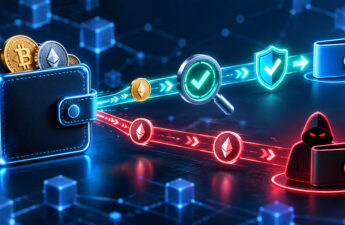

Imagine opening your inbox to find what looks like a real message from your crypto exchange. The logos and formatting are spot on. It’s like a wolf in sheep’s clothing, but with better design.
These sophisticated operations have moved beyond the old “Nigerian prince” emails. They’re now designed to trick even the most cautious people.
The irony is, while we worry about hackers, the biggest risk is us. It’s the space between our chair and keyboard.
In the world of digital assets, these tricks are not just annoying. They can be disastrous. Unlike banks, there’s no hotline to call when your crypto goes missing.
Scammers pretend to be real exchanges and wallets. They trick users into giving up their private keys or login details. Once they have your digital identity, it’s gone for good.
Most Common Tricks
Ever notice how digital scammers work like Hollywood’s top con artists? They trick you into giving them your money, making you think it was your choice. Let’s look at their top tricks.
The “zero risk, massive returns” pitch should set off your warning bells. These scams often come through social media or dating apps. It’s weird to think of a real investment coming from a random Tinder message.
Scammers love to pretend to be corporate bigwigs. They’ll say they’re from Amazon, Microsoft, or your bank’s fraud team. It’s like a mix of identity theft and corporate costume play, and they’re really good at it.
Fake ICOs are like selling the Brooklyn Bridge online. They have fake whitepapers, teams, and promises that make even the most hopeful investor doubt.
Romance scams are another trick. Your online crush turns into your financial advisor. They build trust first, then ask you to invest in their “sure thing.”
All these scams use the same trick: they play on human feelings. They tap into greed, fear, and loneliness. It’s all about digital trickery.
To keep your safe crypto accounts safe, you need to spot these tricks. Remember, if it seems too good to be true, it probably is. This is true, even if it comes via dating app or email out of the blue.
Your best defense? Be cautious and check everything. Trust should be earned, not given away easily in the world of crypto security.
Examples in Crypto
Ever got an email from Elon Musk saying he’d double your Bitcoin? Welcome to the world of phishing crypto scams, where creativity knows no bounds. These scams are not your grandma’s Nigerian prince emails. They’re high-tech heists, dressed up in Silicon Valley style.
The “celebrity endorsement” scam is a real showstopper. It tricks people into sending Bitcoin to fake QR codes. Scammers pose as Elon Musk, Vitalik Buterin, or other big names in crypto. They promise to double your money if you send them some first. It’s shocking how many people fell for this, showing that greed can win out even in decentralized finance.

Then, there’s the “exchange support” email that comes at the worst time. It looks real, with the right logo and a sense of urgency. But clicking that link can lead to your account being emptied fast. It’s like handing over your wallet to a pickpocket.
Drainer scripts are another clever scam. They can empty your wallet in seconds, without needing your password. It’s like digital pickpocketing, so slick it would impress Ocean’s Eleven. You might visit a fake NFT marketplace, connect your wallet, and lose your assets forever.
Remember the “investment manager” who contacts you out of the blue? They promise huge returns if you send them your crypto. Or the online “love interest” who wants to help you invest. Both are scams that target your wallet, masquerading as romance.
The pump-and-dump scheme is another scam. It makes a cryptocurrency’s price skyrocket, then sells at the peak. It’s an old trick, now with a blockchain twist. It’s like Wall Street’s oldest trick, but with a new flavor.
| Scam Type | How It Works | Red Flags | Protection Level Needed |
|---|---|---|---|
| Fake Exchange Emails | Impersonates legitimate platforms to steal login credentials | Urgent language, slight domain variations | High vigilance + 2FA |
| Wallet Drainers | Malicious sites that empty wallets upon connection | Too-good NFT deals, unfamiliar sites | Cold wallet storage |
| Celebrity Endorsements | Fake promises from crypto influencers | Requests for upfront crypto transfers | Basic skepticism |
| Romance Scams | Fake relationships leading to investment requests | Rushed intimacy, crypto-only help | Emotional awareness |
| Pump-and-Dump Groups | Artificial price inflation followed by mass selling | “Guaranteed” returns, pressure to buy quickly | Research before investing |
These phishing crypto scams rely on hope, fear, and trust. The sites look so real, like a fake Rolex that stops working when it gets wet. They’re designed to trick you into trusting them.
If you get an email asking for your login info, pause. Check the sender and attachments. That moment of hesitation could save your crypto from scammers.
Best Practices to Stay Safe
Think of your digital security like building a medieval castle in cyberspace. You need multiple layers of defense and a skeptical eye for suspicious activity. Remember, not every prince is actually royalty.
The crypto landscape might feel like the Wild West. But you can be both sheriff and fortress builder with these essential strategies.
Let’s start with the golden rule: only scammers demand payment in cryptocurrency. No legit business will pressure you to send digital assets first. It’s like wiring cash to a foreign country – it never ends well.
When someone mixes online dating with investment advice, run fast. These romance scams are psychological masterpieces designed to exploit human emotion.
Building truly safe crypto accounts requires the “Three Pillars of Digital Wisdom”: skepticism, security, and storage. Let’s break down each component:
The Skepticism Principle
If an investment promises guaranteed returns or unusually high profits, your internal alarm should scream. Do your research like an investigative journalist. Verify claims, check backgrounds, and remember that urgency is the scammer’s best weapon.
Always trade on secure, reputable platforms. These exchanges have more security layers than a paranoid dragon’s treasure hoard. They include insurance protections and regulatory compliance that newer platforms might lack.
The Security Framework
Password hygiene isn’t about complexity theater; it’s about uniqueness. Using the same password across platforms is like using one key for your house, car, and safety deposit box. It’s convenient until it becomes catastrophic.
Multi-factor authentication isn’t an inconvenience; it’s the digital equivalent of a moat and drawbridge. It adds that second layer that stops 99.9% of automated attacks dead in their tracks.
Keep your software, devices, and networks updated and secure. This basic maintenance is like changing the locks on your digital doors regularly. It’s boring but essential. For broader phishing protection strategies, even major tech companies emphasize these fundamentals.
The Storage Solution
Secure wallets and cold storage options are your underground vaults for digital treasure. Hot wallets for spending money, cold storage for long-term holdings. This separation minimizes risk like not keeping your life savings in your wallet.
Here’s how these practices stack up against common threats:
| Security Practice | Protection Level | Implementation Difficulty | Threats Mitigated |
|---|---|---|---|
| Unique Passwords | High | Easy (with manager) | Credential stuffing, account takeover |
| Multi-Factor Authentication | Very High | Medium | Phishing, brute force attacks |
| Cold Storage Wallets | Extreme | Hard | Exchange hacks, online theft |
| Skeptical Investment Approach | Critical | Mental discipline | Scams, fraudulent schemes |
Your crypto security should operate like a Swiss watch – complex, precise, and reliably protecting your assets around the clock. The few minutes you spend implementing these practices could save you from losing everything to someone who spent months planning your digital downfall.
Remember: in the world of digital assets, paranoia is just another word for good operational security. Verify everything twice, trust nothing automatically, and build your defenses before you need them, not after.
Reporting Bad Actors
When phishing crypto scams happen, don’t panic. Start by becoming a digital detective. Every detail is important in this digital chase.
Reporting phishing crypto scams is not just about getting your money back. It’s about helping authorities track these scammers. They use this data to follow them across the blockchain.

Your first step is to report at FTC at ReportFraud.ftc.gov. They act like a digital neighborhood watch. For more complex scams, also report to CFTC at CFTC.gov/complaint and SEC at sec.gov/tcr.
Here’s a tip: report to the exchange right away. It’s like stopping a check with blockchain technology. Many platforms can freeze transactions if you act fast.
Don’t forget the Internet Crime Complaint Center (IC3 at ic3.gov). It’s your hotline for serious phishing crypto cases. They’re like 911 for your stolen assets.
Your plan should be:
- Document everything – screenshots, transaction IDs, email headers
- Contact the cryptocurrency exchange immediately
- File reports with FTC, CFTC, SEC based on the scam type
- Submit to IC3 for broader cybercrime tracking
- Notify your bank if traditional payment methods were involved
Remember, each report adds to the trail. You might not get your money back. But you could save someone else from the same scam. It’s a way to fight back and help others.
Checking Website Legitimacy
Ever played spot-the-difference with your life savings? Welcome to crypto website verification – where that extra ‘s’ in https means more than your ex’s last text message.
Let’s start with the digital equivalent of checking a painting’s signature: the URL. That string most people ignore like terms and conditions actually holds the keys to the kingdom. Look for the padlock icon – it’s not just decoration but a genuine security certificate. The ‘s’ in https? That’s the difference between a secure connection and digital shouting in a crowded room.
Before investing, become an internet detective. Search the company name plus words like ‘review,’ ‘scam,’ or ‘complaint.’ See what others are saying – if the only reviews sound like they were written by the founder’s mother, that’s your first red flag.
Domain age matters too. Use WHOIS lookup to check registration dates. That “established exchange” that registered last week? About as legitimate as a three-dollar bill.
Watch for lookalike domains – examp1e.com instead of example.com. Scammers count on you moving fast and not looking closely. Never click links in emails or messages. Type URLs directly instead.
Grammar errors are the digital equivalent of a fake Rolex’s second hand not sweeping smoothly. Professional operations don’t sound like they were translated through three languages.
Check contact information. If the only option is a form that probably goes to nowhere, that’s a red flag bigger than a bull market rally. Remember: no legitimate platform will ever ask for your seed phrase or private key.
Trust but verify – and in crypto, verify twice. Your safe crypto accounts depend on this digital authentication dance.
Tips for Beginners
Welcome to the world of digital finance, where luck isn’t enough. Your journey is like navigating a digital minefield. Every step needs careful thought.
Start with small amounts you can afford to lose. Crypto transactions can’t be undone, unlike credit card payments. Once you send digital coins, they’re gone unless the recipient returns them.
Your seed phrase is like your digital DNA. Treat it like the nuclear codes. Write it down, keep it safe, and never share it online. It’s your first defense against phishing attacks.
Spread out your storage like you would with investments. Don’t keep everything in one place. Use cold storage for most of your assets – it’s like a digital safe.
Crypto doesn’t have the same protections as traditional finance. No FDIC insurance, no chargebacks, no safety net. Your safety is up to you in this world.
The market’s ups and downs are exciting and scary. Keep learning, question everything, and never stop. Your crypto education starts now. Be cautious and curious.