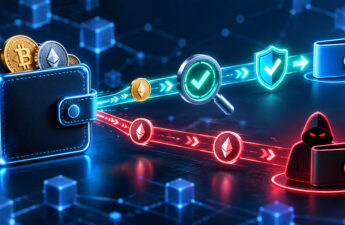
Welcome to the digital frontier where your financial sovereignty begins with a simple choice. Think of it like this: do you want to rent an apartment or own Manhattan real estate?
That’s the difference between custodial and non-custodial solutions. One lets you play house while the other gives you actual deeds and keys.
Your beginner crypto wallet isn’t just an app—it’s your sovereign territory in the blockchain wild west. Control means everything here. Those random strings of characters? They’re not just passwords. They’re your digital property rights.
Remember that seed phrase everyone keeps mentioning? It’s not locker room talk. It’s the fundamental law of this digital land. Lose it and you’re not just locked out—you’re homeless.
True ownership in a trustless system means you’re the bank, the vault, and the security guard. No intermediaries. No permission slips. Just pure, unadulterated financial freedom.
Custodial vs. non‑custodial: Pros/cons for beginners
Imagine your crypto assets: do you want them managed by a financial concierge or secured in your own digital fortress? This isn’t just a technical choice—it’s a philosophical stance on personal sovereignty versus convenience.
Custodial wallets work like traditional banks. Someone else holds your keys. They handle security, backups, and customer support. You get convenience but sacrifice absolute control.
Non-custodial options put you in the driver’s seat. You become your own bank. This means complete self-custody of your assets. No third party can freeze your funds or peek at your balance.
Let’s break down the trade-offs for someone choosing their first beginner crypto wallet:
| Feature | Custodial Wallet | Non-Custodial Wallet |
|---|---|---|
| Control | Third-party controls keys | You control private keys |
| Security Responsibility | Provider’s problem | Your responsibility |
| Recovery Options | Password reset available | Seed phrase is everything |
| Beginner Friendliness | Very easy to use | Steeper learning curve |
Custodial services shine for newcomers. They offer familiar login experiences. Lost your password? No problem—customer support can help. It’s the financial equivalent of training wheels.
But here’s the catch: not your keys, not your crypto. Exchange collapses and regulatory freezes can lock you out of your own assets. Remember Mt. Gox? Exactly.
Self-custody means true ownership. Your crypto lives on the blockchain, not some company’s server. You interact with it through your private keys. Lose those keys? Well, let’s just hope you memorized that seed phrase.
The ideal beginner crypto wallet choice depends on your risk tolerance. Are you dipping toes in crypto waters? A custodial service might feel safer. Planning to go full crypto-native? Embrace self-custody from the start.
Most experts recommend starting with custodial options for small amounts. Graduate to non-custodial wallets as your portfolio grows. It’s like moving from apartment renting to home ownership—both have merits at different life stages.
Your first crypto wallet sets the tone for your entire journey. Choose wisely, but remember: you can always change your mind later. The blockchain doesn’t care about your commitment issues.
Wallet types explained: Hardware, software, mobile, browser, paper
Choosing a crypto wallet is like picking a home for your digital fortune. Do you want Fort Knox security or downtown convenience? Each option offers different trade-offs between safety and accessibility.
Let’s break down the five main wallet types. Think of them as real estate for your digital assets.
Hardware wallet
A hardware wallet is the digital equivalent of a bank vault. These physical devices store your private keys offline, making them nearly impervious to online attacks.
Popular options include Ledger and Trezor. They connect to your computer only when you need to make transactions.
The security benefits are obvious. Your keys never touch internet-connected devices. It’s like keeping your life savings in a physical safe.
But there’s a trade-off. Hardware wallets cost money ($50-$200). They’re less convenient for daily spending. You wouldn’t carry a bank vault to buy coffee, would you?
Software wallet
Software wallets live on your desktop or laptop. They’re free to download and offer more features than hardware options.
Think Exodus or Electrum. These wallets balance security with functionality. They’re connected to the internet but include encryption and security features.
The convenience factor is high. You can access multiple cryptocurrencies and DeFi platforms easily. It’s like having a well-equipped financial command center.
Security risks exist though. Malware or hacking could compromise your funds. Always use updated antivirus software with any software wallet.
Mobile wallet
Mobile wallet apps turn your smartphone into a crypto bank. They’re perfect for everyday transactions and on-the-go access.
Trust Wallet and Coinbase Wallet are popular choices. They combine convenience with decent security features like biometric authentication.
Think of mobile wallets as your digital wallet. Great for small amounts and daily use. You wouldn’t keep your life savings in your physical wallet, right?
Mobile security depends on your phone’s protection. Use strong passwords and avoid jailbroken devices for crypto storage.
Browser wallet
Browser wallets like MetaMask live in your web browser. They’re essential for interacting with decentralized applications and NFT marketplaces.
These wallets are incredibly convenient for Web3 activities. One-click connections to dApps make them user-friendly.
But security is their weak point. Browser extensions can be vulnerable to phishing attacks and malicious websites.
Use browser wallets for active trading and dApp interactions only. Never store large amounts in them long-term.
Paper wallet
Paper wallets are the analog option. They’re simply printouts of your public and private keys, completely offline.
This method offers cold storage security. No digital footprint means no hacking risk. It’s like burying gold in your backyard.
The downside? Physical vulnerability. Paper can be lost, damaged, or stolen. You also need to manually enter keys for transactions.
Paper wallets work best for long-term storage of significant amounts. Treat them like important physical documents.
| Wallet Type | Security Level | Convenience | Best For | Cost |
|---|---|---|---|---|
| Hardware Wallet | Very High | Medium | Long-term storage | $50-$200 |
| Software Wallet | High | High | Desktop trading | Free |
| Mobile Wallet | Medium | Very High | Daily transactions | Free |
| Browser Wallet | Medium | Very High | dApp interactions | Free |
| Paper Wallet | Extreme | Very Low | Cold storage | Free |
Each wallet type serves different needs. Your choice depends on how much security you want versus how much convenience you need.
Most crypto users eventually own multiple wallet types. They use each for its specific strengths. It’s like having both a safe deposit box and a checking account.
Remember: no single wallet solution fits all needs. The best approach is often a combination based on your crypto activities.
Security basics: Seed phrases, PINs, passphrases, backups
Your crypto security is like a strong fortress. Each part has its own role. Your seed phrase is the key to rebuild everything. Your PIN keeps unwanted visitors out. And your backups are secret plans hidden away.
Your seed phrase is very important. It’s 12-24 words that are your digital identity. If you lose it, your crypto is gone. But if you remember it, you can get back all your money on any wallet.

Think of your wallet’s PIN as a bouncer. It doesn’t care about your identity or how much money you have. Just four to eight digits protect your assets from anyone who gets your device.
Passphrases are like secret codes. They make a hidden wallet inside your wallet. Even if someone gets your seed phrase, without the passphrase, they can’t get in. It’s like a secret compartment that only opens with the right knock.
Backups are key to staying calm. You need many copies in different places. Phones can get wet, houses can catch fire, and devices can break. Your backup plan should be strong enough to survive anything.
Here’s how these security elements work together:
| Security Layer | Function | Best Practices | Risk If Compromised |
|---|---|---|---|
| Seed Phrase | Master recovery key | Write on steel, multiple locations | Total loss of funds |
| PIN Code | Device access control | 6+ digits, don’t reuse passwords | Device access but not funds |
| Passphrase | Hidden wallet creation | Memorize or store separately | Hidden wallet remains secure |
| Backups | Disaster recovery | 3-2-1 rule: 3 copies, 2 media, 1 off-site | Single point of failure |
With self-custody, you’re your own bank security boss. It’s a big responsibility. But with these steps, you’re not just keeping money safe. You’re also keeping your financial freedom.
Remember, your seed phrase is more important than your social security number. Treat it like a secret code. Because in crypto, you’re not just protecting money. You’re protecting your freedom.
Quick Picks by Use Case: Your Digital Asset Matchmaker
Choosing a crypto wallet isn’t a one-size-fits-all deal. It’s more like picking the right tool for the job. You wouldn’t use a sledgehammer to hang a picture. Different assets need their own special homes. I’ve tested many options to give you a curated list.
For everyday spending crypto, you need something quick and convenient. Think of it as digital pocket money, not a long-term investment. A mobile wallet is perfect for this.
MetaMask Mobile is the top choice for daily crypto needs. It’s easy to use, ready for DeFi, and supports most major chains. It’s great for buying coffee or making quick swaps.
For long-term holdings, you need top-notch security. That’s where hardware wallet options come in. They’re like digital safes. Ledger Nano X is my favorite for its Bluetooth and strong asset support.
DeFi fans need wallets that can handle multiple chains. It’s like having a passport for your digital assets. You’re not just holding assets; you’re farming, staking, and bridging across different ecosystems.
Trust Wallet is perfect for DeFi enthusiasts. It has a built-in Web3 browser and supports many dApps. It’s like having a whole financial district in your pocket.
NFT collectors need special storage that showcases their assets. It’s like an art gallery for your digital collection. You want something that displays your NFTs beautifully while keeping them safe.
Rainbow Wallet is great for NFT collectors. It has a stunning NFT display and focuses on Ethereum security. It turns your collection into a showcase, not a hidden vault.
| Use Case | Recommended Wallet | Best For | Security Level |
|---|---|---|---|
| Everyday Mobile | MetaMask Mobile | Quick transactions, DeFi access | Medium |
| Long-term Storage | Ledger Nano X | Bitcoin, Ethereum cold storage | Maximum |
| Multi-chain DeFi | Trust Wallet | Cross-chain farming, staking | Medium-High |
| NFT Collection | Rainbow Wallet | Ethereum-based NFT display | Medium |
Your choice depends on what you’re protecting. For small amounts, mobile convenience is key. For life savings, hardware security is essential. The market rewards strategic allocation, not one-size-fits-all thinking.
Step‑by‑step setup: Creating, backing up, and testing a small send
Welcome to crypto’s version of driver’s ed. It’s like learning to drive, but with higher stakes. We’ll make setting up your wallet easy and fun.
Setting up your wallet is like building IKEA furniture. One wrong move and your digital assets are useless.
Download your wallet from official sources only. Avoid third-party sites, as they can be risky.
When you set up your wallet, you’ll create your seed phrase. This is like your digital DNA. You’ll get 12-24 words in a specific order.
Keep your seed phrase safe. No screenshots or cloud storage. Just pen, paper, and focus.
Backup Protocol: Your Digital Resurrection Kit
Writing down your seed phrase is essential. It’s your only protection in crypto’s world. Follow these backup rules:
- Use acid-free paper (yes, really—ordinary paper deteriorates)
- Write clearly—no cursive hieroglyphics
- Create multiple copies stored in separate secure locations
- Never store digitally—this isn’t Instagram worthy
Test your backup by recovering your phrase. Most wallets let you check before funding.
The Test Transaction: Cryptographic Toe-Dipping
Send a small test transaction before moving real money. Think of it as sending pizza money.
This test shows everything works. It also helps you understand network fees and confirmation times.
| Step | Action | Pro Tip |
|---|---|---|
| 1 | Send minimal amount | Use exact same network both ends |
| 2 | Confirm receipt | Check transaction hash on explorer |
| 3 | Send back to original wallet | Practice receiving AND sending |
| 4 | Verify final balance | Account for network fees both ways |
This process turns theory into practice. You’ll feel confident knowing your wallet works when you need it.
In crypto, there’s no undo. So, setting up your wallet correctly is key.
Recovering a wallet: What to do and what not to do
Recovering a crypto wallet is like doing open-heart surgery on your finances. One mistake and you’re in trouble. Your seed phrase becomes the most important thing in your life.
Recovery needs to be done with great care. First, find a safe, offline place. Use only official wallet software. Enter your seed phrase in the right order, like solving a puzzle for your money.

But beware of the dangers. Never share your seed phrase with anyone or anywhere. This includes emails, cloud storage, or suspicious websites. I’ve seen more people lose money to fake sites than to real hacks.
Self-custody means you’re in charge of everything. Treat your recovery like a top-secret mission. Test it with small amounts first, like a fire drill.
| Scenario | Right Approach | Wrong Approach |
|---|---|---|
| Lost device | Use original wallet software with seed phrase | Download unverified “recovery” apps |
| Forgotten PIN | Full reset using seed phrase backup | Attempt brute-force guessing |
| Damaged hardware wallet | Order replacement, use seed on new device | Try DIY repairs risking total loss |
| Unresponsive software | Reinstall from official source, restore | Share seed phrase with “support” agents |
Remember: Your seed phrase is the key to your self-custody kingdom. Protect it like the crown jewels. In crypto, there’s no forgiveness for mistakes.
Common mistakes and scam red flags
Welcome to crypto’s Darwin Awards ceremony – where financial darwinism plays out in real time. The digital wild west has more grifters than a political convention, and they’re all looking for fresh meat.
Let’s start with the classic blunder: sending crypto to wrong addresses. It’s like mailing cash to a random mailbox – once it’s gone, it’s gone forever. Always double-check those long strings of characters. One wrong digit and your funds vanish into the digital ether.
Then there’s the too-good-to-be-true yield farming schemes. If an offer sounds like your Nigerian prince email, it’s probably a scam. Legitimate platforms don’t promise 1000% returns overnight.
Watch out for these red flags in your beginner crypto wallet journey:
- Unsolicited DMs with “support” or “investment opportunities”
- Fake customer service accounts asking for your seed phrase
- Urgency tactics – “Act now or miss out forever!”
- Copycat websites with slightly misspelled URLs
Your mobile wallet security starts with skepticism. Treat every unsolicited message like a stranger. Real crypto projects don’t need to slide into your DMs.
| Scam Type | Red Flags | Protection Strategy |
|---|---|---|
| Fake Support | Asks for seed phrase | Never share recovery words |
| Phishing Sites | Misspelled URLs | Bookmark legitimate sites |
| Pump Groups | “Guaranteed” profits | Research before investing |
| Airdrop Scams | Requires sending crypto first | Legitimate airdrops are free |
Remember: in crypto, if it feels wrong, it probably is. Your intuition is the best beginner crypto wallet security feature you’ve got.
Fees, networks, and supported assets 101
Welcome to Crypto Economics 101. Here, we learn that ‘free’ transactions are as real as unicorns. Every blockchain action comes with costs. It’s like city traffic – sometimes you pay more, other times less.
Network fees are like toll roads for your digital assets. They pay miners or validators to process your transaction. These fees change based on how busy the network is – like surge pricing during rush hour.
Timing is key in managing fees. Send crypto at 2 AM on a Sunday and you might pay pennies. But try during an NFT drop frenzy? You could spend more on fees than the transaction itself. Smart users watch network activity like hawk-eyed stock traders.
Supported assets show what you can store in your wallet. It’s like checking if your new apartment has the right plumbing for all your gadgets. Some wallets handle hundreds of tokens, while others specialize in just Bitcoin or Ethereum.
Your choice of software wallet affects both fees and asset support. Browser extensions often have lower fees but support fewer tokens. Desktop applications usually offer more asset compatibility with moderate fees.
Mobile wallet users enjoy convenience but face unique challenges. These apps need to balance user experience with complex network fee structures. The best mobile wallet options let you choose between speed and economy.
Always check asset support before transferring funds. Sending tokens to a wallet that can’t receive them hurts. Most quality wallets clearly list supported networks and tokens in their documentation.
Remember: cheaper fees often mean slower transactions. It’s a balance between instant gratification and fiscal responsibility. Waiting twelve hours can save you fifty percent on transaction costs.
Pro tip: Set up fee alerts on your preferred software wallet. Many modern applications notify you when network conditions are better for lower costs. Your future self will thank you for those saved satoshis.
Privacy considerations and best practices
Welcome to the digital world where every transaction is recorded forever. Your crypto journey is not just about making money. It’s also about keeping your financial life private in a world full of surveillance.
Blockchain is like the world’s most open ledger. Every transaction stays forever, seen by everyone. Your wallet choice decides if you share your financial life openly or keep it private.
Self-custody with a hardware wallet is the best way to protect your privacy. Unlike exchange wallets that need full KYC, these devices let you stay anonymous while trading.
Here’s how privacy works in crypto today:
| Privacy Level | Wallet Type | Anonymity Level | KYC Required |
|---|---|---|---|
| Maximum Exposure | Exchange Wallets | Low | Full Identity Verification |
| Balanced Approach | Mobile Software Wallets | Medium | Optional/Selective |
| Maximum Privacy | Hardware Wallets | High | None Required |
Using the same address for all transactions is a big privacy mistake. It’s like always wearing the same outfit to every event. Soon, everyone will know it’s you.
Here are some tips for keeping your privacy:
- Make new addresses for each transaction
- Use Tor for wallet access
- Choose privacy coins for secret transactions
- Don’t share your addresses on social media
- Use VPNs for extra protection
While true anonymity is hard on blockchain, smart self-custody can help a lot. Your hardware wallet is your main defense against financial spying.
The blockchain never forgets, but with smart choices, you can keep your story private. Protect your financial privacy as much as your physical one.
Checklist and next steps
Think of your crypto journey as a space launch—preparation is everything. You’ve got the basics down, but let’s lock in the final checks. Start with a small test transaction. Send a trivial amount to your beginner crypto wallet and back. It’s like a dress rehearsal without the stage fright.
Back up that seed phrase like it’s the nuclear codes. Store it offline, in multiple secure locations. Redundancy isn’t paranoia; it’s protocol. Your seed phrase is your master key—lose it, and you’re locked out forever.
Diversify your wallet types as your portfolio grows. Use a mobile wallet for daily spending, a hardware wallet for long-term holdings. Explore multi-chain options for DeFi or NFT storage. Crypto isn’t a monolith; it’s an ecosystem.
Keep learning. Follow trusted sources, stay updated on security practices, and never stop questioning. Your beginner crypto wallet is just the entry point. The real adventure begins now—ready for liftoff?