
Do you remember that first time you tried to swap tokens? It felt like trying to use the Large Hadron Collider. The numbers flew by, the fees were scary, and that final button was daunting.
Imagine a financial simulator for digital assets. These places let you practice trading without losing real money, just like practice before you buy.
There are testnet wallets that give out fake ETH like candy. Paper trading platforms let you make big mistakes with pretend money. It’s like learning to fly before you carry passengers.
Why risk your real money when you can practice first? These tools help newbies become confident traders. They’re like your own personal financial gym.
Paper trading on exchanges and simulator apps
Remember when ‘paper trading’ meant writing down trades on paper? Those days were the start of demo trading before digital tools came along. Now, we have virtual places to practice investing without real money.
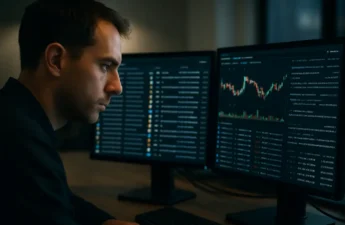
Today’s stock market simulators are very realistic. Sites like Phemex let you try out crypto strategies without losing money. It’s like getting financial training for fast-paced markets.
- Real-time market data without real-money consequences
- Advanced charting tools and technical indicators
- Psychological safety to make spectacular mistakes
These simulators are very accurate. They show what it’s like to deal with market issues and make tough decisions. You can feel the shock of a bad trade without losing money.
This demo trading setup is great for learning. You can test if you’re good at day trading or investing for the long term. It helps you see if your risk level matches your plans.
Platforms have also evolved to include social elements. Many now offer leaderboards, competitions, and collaborative spaces where users can learn from each other. In some cases, these experiences even connect with real-world initiatives like community economic development events, where financial education, innovation, and local engagement intersect—bringing digital learning into tangible community growth.
The real advantage of demo trading is freedom. You can experiment, take bold risks, and even fail dramatically—all without consequences. That’s where real learning happens.
Whether you’re using exchange simulators or mobile apps, starting with paper trading is one of the smartest moves you can make. Think of it as a full rehearsal before stepping onto the financial stage.
Testnets explained: Networks, faucets, and limitations
Imagine NASA testing rockets in your backyard before they go to space. That’s what testnets do for blockchain. They’re digital testing grounds where developers try out code without risking real money. These virtual worlds are like main networks but use fake tokens, perfect for testing.
Think of testnets as crypto flight simulators. You can try everything without fear of losing real money. Places like Ethereum’s Sepolia and Bitcoin testnet are where you can make big mistakes with fake money.
What Are Testnet Wallets and Why Do You Need Them?
Testnet wallets are your ticket to this digital world. They work like real wallets but hold worthless tokens. Why use them? It’s safer than practicing with real money in crypto.
These wallets let you:
- Make trades without losing money
- Test new crypto ideas safely
- Learn about gas fees and transactions
- Practice security without risk
You wouldn’t drive a Formula 1 car without simulator practice. Testnet wallets offer a safe space to learn without losing money.
Historical Background of Test Networks
The idea of test networks started around 2010 with Bitcoin. Developers needed a safe place to test upgrades without breaking the main network. The first testnets were just copies of Bitcoin with changes.
Ethereum took this idea further, creating many test networks. From Ropsten to Goerli to Sepolia today, each one improved testing. These networks became more like real environments, simulating real-world conditions well.
Faucets were introduced later, giving out free testnet tokens. This solved the problem of needing tokens to test but not having them. Now, faucets are like candy machines, giving you all the tokens you need to play.
But testnets have limits. They can’t perfectly mimic mainnet congestion. They don’t fully capture the emotional impact of real money decisions. And sometimes, they can make you feel too secure. But as training tools, they’re as close to the real thing as you can get without financial risk.
Step‑by‑step: Create a testnet wallet and run a mock swap
This is like your crypto flight simulator. It’s all the excitement of trading without the risk. You can make mistakes without losing real money.
Setting up your first testnet wallet is like getting a Lamborghini that runs on fake money. It’s thrilling, but there are no real consequences. Let’s explore this digital world together.
Setting Up Your Ethereum Sepolia Testnet Wallet
The Sepolia testnet is like Broadway for crypto actors. It’s where you practice before the real show. You get all the mainnet features without the risk.
Choosing Sepolia is like picking the newest iPhone. You get the latest features and great support. It’s the top choice for Ethereum developers today.
Installing and Configuring MetaMask
MetaMask is like a Swiss Army knife for crypto wallets. It does everything from holding assets to using dApps. It’s easy to install, like setting up a dating app profile.
- Visit the official MetaMask website (metamask.io) – this is key because fake sites are everywhere
- Add the extension to your browser – Chrome, Firefox, or Brave work well
- Create your wallet and write down the secret recovery phrase like it’s the nuclear codes
- Now for the magic: switch to Sepolia testnet in network settings
Configuring MetaMask for Sepolia needs specific network details. It’s like setting your GPS for a new city. Get it wrong and you’ll end up lost.

| Network Parameter | Value | Purpose |
|---|---|---|
| Network Name | Sepolia Test Network | Identifies the test environment |
| New RPC URL | https://sepolia.infura.io | Connection to Sepolia nodes |
| Chain ID | 11155111 | Unique network identifier |
| Currency Symbol | SEP | Testnet Ethereum designation |
| Block Explorer | https://sepolia.etherscan.io | Transaction verification tool |
Once set up, your testnet wallet is ready for action. But first, you need some fake money to play with.
Getting testnet ETH is easy. Use the Sepolia faucet (google “Sepolia faucet”) to get free testnet cryptocurrency. These faucets give out free money fast.
Now, let’s do your first mock swap. Find a testnet decentralized exchange like Uniswap’s Sepolia version. Pick any token pair, like ETH for testnet USDC.
Check the swap details carefully. Confirm the transaction and watch it happen. You’ve just done a risk-free blockchain surgery!
This whole process is quick but teaches you a lot about DeFi. Your testnet wallet is your crypto dojo. Train hard, make mistakes, and get ready for real markets.
Recording a practice portfolio and tracking outcomes
Think of your practice portfolio as a financial diary that doesn’t judge your terrible investment choices. Unlike my ex’s journal that mysteriously disappeared after our breakup, this record should stick around forever.
Why bother documenting pretend trades? Because without tracking outcomes, you’re just gambling with imaginary money. You might as well be playing Monopoly while pretending to be Warren Buffett.
The magic happens when you transform random trades into actionable intelligence. Your practice portfolios become crystal balls revealing whether you’re destined for Wall Street glory or should stick to index funds.
Here’s what separates amateurs from pros in mock trading documentation:
- Entry/exit points – Because “I bought it when it felt right” isn’t a strategy
- Emotional state during trades – Panic, greed, or just bored at 2 AM?
- Market conditions – Was everyone winning while you were losing?
- Lesson learned – “Don’t trade after three margaritas” is a good start
Your tracking system should answer one burning question: Are you making the same mistakes or actually improving? I’ve seen traders with spreadsheets more detailed than the Pentagon’s budget. Their practice portfolios tell stories numbers alone can’t capture.
| Metric | Basic Tracking | Pro Level | Why It Matters |
|---|---|---|---|
| Win Rate | Yes/No on profits | Percentage with context | Shows consistency patterns |
| Risk-Reward Ratio | Simple profit/loss | 1:3 minimum tracked | Reveals risk tolerance reality |
| Time Analysis | Trade dates only | Duration + market hours | Uncovers timing skills |
| Error Catalog | Mistakes noted | Patterns categorized | Prevents repeat failures |
The best practice portfolios I’ve seen include screenshots of charts with annotations. It’s like leaving breadcrumbs for your future self to follow. “Here’s where I thought it was going up… and here’s where I was terribly wrong.”
Remember: You’re not just collecting data. You’re building evidence about your trading personality. Are you the cautious type who misses opportunities? Or the reckless cowboy who confuses luck with skill?
Your future self will thank you for this financial diary. Unless you’re making the same mistakes – then you might want to burn the evidence and take up gardening instead.
Common pitfalls: Slippage, gas, network mix‑ups
Welcome to crypto’s hidden fees and wrong turns. You might think you’ve got it down, but reality hits hard. These issues don’t just cost pretend money; they teach harsh lessons about real trading.
Slippage is when your trade price changes unexpectedly. It’s like ordering a latte and getting charged for a full breakfast. In volatile markets, the price you want and the price you get can be very different. This is why practice platforms include slippage simulations.
Gas fees are like toll roads on blockchain. You might think you’re taking the scenic route, but you end up paying high rates for network congestion. During practice, gas fees simulate real network conditions. They teach you that sometimes, waiting a few minutes can save you a lot of money.
Network mix-ups are embarrassing moments. Sending testnet ETH to a mainnet address is like mailing your vacation postcard to your office. The assets disappear into the digital void. Always double-check addresses and network settings to avoid these mistakes.
Then there’s faucets safety. Fake faucets are like digital scams from Nigeria. They promise free crypto but deliver malware or steal your data. Legitimate testnet faucets never ask for private keys or sensitive information.
Here’s how to avoid these traps:
- Always simulate slippage in your practice trades
- Monitor gas fees before confirming transactions
- Bookmark legitimate faucets and avoid searching randomly
- Use transaction simulation tools to preview outcomes
Remember: These pitfalls aren’t bugs—they’re features. They exist in both practice and real trading environments. Mastering them in testnet means you won’t learn expensive lessons with real assets. That’s the whole point of practicing before you buy.
Proper faucets safety practices include verifying URLs, using dedicated testnet wallets, and never connecting mainnet wallets to unfamiliar sites. Your future self will thank you for these habits when you transition to real trading.
From practice to real: Setting rules and risk limits
Trading is like taking off training wheels, but the road is full of ups and downs. Your skills in crypto paper trading are put to the test. It’s time to face your own fears.
Do you remember risking 50% of your fake money on a meme coin? Real money makes you feel like you’re on a rollercoaster. That small 5% change feels huge.

Switching from fake to real money is tough. Paper trading is like a game with no real consequences. But real trading shows you how your emotions can control you.
Your Financial Guardrails: Non-Negotiable Rules
Before you start trading for real, set these rules:
- Daily loss limit: Know when to stop before emotions take over
- Position sizing rules: Don’t risk everything on one bet
- Trade journal mandate: Keep track of every decision
- Cool-down period: Take a break after big wins or losses
These rules are like airbags for your mind. They help you stay safe, even when the market is tough.
Risk Management: Your Financial Seatbelt
Here’s how to stay safe:
| Risk Level | Max Position Size | Daily Loss Limit | Emergency Protocol |
|---|---|---|---|
| Conservative | 2-5% of portfolio | 1-2% | Stop trading for 24 hours |
| Moderate | 5-10% of portfolio | 2-3% | Review last 5 trades |
| Aggressive | 10-15% of portfolio | 3-5% | Return to paper trading |
Going from crypto paper trading to real markets is a big step. Your fake wins gave you confidence. But real losses teach you valuable lessons. It’s not about avoiding mistakes, but learning from them.
Make rules like you’re setting a self-destruct for bad choices. Trading is not just about the market. It’s about controlling your own mind.
Classroom/club formats for learning together
Do you remember study groups in college? Now, imagine them with crypto charts and simulated losses. Trading communities are changing how we learn markets together.
These digital classrooms turn solo screen time into team learning. Discord servers are full of live chart talks. Telegram groups are like sports fans discussing last night’s game.
Beginners and experts share demo trading results. Everyone learns from successes and failures without real money risk. It’s like having a workout buddy for your financial health.
Most groups have set formats:
- Weekly challenge rooms where members compete using paper trading platforms
- Strategy breakdown sessions analyzing historical market scenarios
- Live trade-alongs using testnet environments with guided commentary
- Post-mortem discussions reviewing what went right or wrong in simulations
These groups offer accountability solo traders lack. Explaining trades to peers makes you think twice. Peers often spot risks you might miss.
The emotional support when your simulated portfolio drops is priceless. Nothing unites people like losing pretend money together. It’s like financial therapy with charts and memes.
Educational value soars in these settings. New traders soak up terms and strategies. Veterans improve by teaching. Everyone gains from different views on the same market.
These communities show demo trading can be social. The shared journey turns theory into practical wisdom. You’re not just reading charts; you’re learning to think like a trader with a team.
Safety note: Avoiding malware faucets and fake sites
Imagine a digital watering hole where every thirsty crypto learner gathers – now picture poison in the water. That’s the reality of malicious faucets lurking in testnet environments. These aren’t harmless practice tools; they’re digital wolves in sheep’s code.
Legitimate testnet resources should never ask for more than a wallet address. If a site requests your seed phrase or private keys, you’ve stumbled upon a digital robbery in progress. These scams often mimic real faucets with professional-looking interfaces – the crypto equivalent of a Trojan horse gift-wrapped in free tokens.
Micro-wallets become your first line of defense. These disposable wallets let you interact with testnets while keeping your main assets separate. Think of them as digital hazmat suits for exploring potentially contaminated territories. Always assume any faucet could be malicious until proven.
How do you spot these digital landmines? Watch for red flags:
- Downloads requiring suspicious browser extensions
- Sites with misspelled URLs (like “Sepolia” becoming “Sep0lia”)
- Faucets promising real cryptocurrency rewards
- Pop-ups requesting wallet connections to unrelated sites
The security protocol is simple: verify everything twice. Bookmark official testnet faucets from trusted sources like Ethereum Foundation pages. Use community-vetted resources instead of random search results. Remember – in the crypto wilderness, healthy skepticism is your best survival tool.
When something promises free money – even pretend money – your spidey senses should tingle. These scams bank on our innate desire for easy rewards. But as any crypto veteran will tell you: if it looks too good to be true, it’s probably draining your wallet while you’re reading the terms of service.
Templates: Trade journal, rules of engagement, review cadence
Your practice portfolios need more than just random notes. Think of your trade journal as the black box recorder of your trading journey. It should survive any crash and tell you exactly what went wrong.
Begin with a simple template: entry price, exit price, position size, and how you felt about your decision. Platforms like MetaTrader 4 and thinkorswim have tools for this. But sometimes, a spreadsheet is better for your own analysis.
Your rules of engagement are not just suggestions—they’re your trading law. Set your risk tolerance, maximum position sizes, and acceptable drawdown limits before trading. Interactive Brokers’ Paper Trading platform lets you test these rules with virtual capital up to $1,000,000.
Regular reviews turn random trades into focused practice. Do weekly performance reviews, monthly strategy assessments, and quarterly system evaluations. Export your demo logs to spreadsheet software to analyze your trades like a quant.
These templates are not just rules—they’re the blueprints for building your trading skills. Trading without a plan is like doing surgery after watching a YouTube video.