
Imagine you’re James Bond at the casino, sipping a martini. The risk? Your whole emergency fund. Investing doesn’t need to be as thrilling as Bond’s adventures, but beginners often dive in with caution.
Warren Buffett advises to invest when others are scared. Yet, crypto fans shout “DIAMOND HANDS!” in Dogecoin memes. Your first step should be careful planning, not reckless betting.
Before you start, make sure you have 3-6 months’ worth of expenses saved. This is key, as shown by experts. It’s like preparing for a mission before you even begin.
Carrying high-interest debt is like betting against yourself. It’s a bad move. Start small, like what you’d spend on three avocado toast brunches a month.
Setting up your first investment account can seem daunting. Choose platforms with top-notch security. Think of your private keys as your digital treasure’s protection.
This journey is about slow, steady wealth growth. Whether you invest $50 or $500 each month, being consistent is key. Now, let’s talk about keeping those gains. *Cue ominous bond villain laugh*
Intro: Finding Your Comfort Zone
Ever tried squeezing into jeans two sizes too small right before taco night? That’s what crypto investing feels like without a comfort zone. Your portfolio should fit just right, like your favorite hoodie. It should be snug enough to keep you alert but loose enough to handle market swings.
Let’s talk about it like Fight Club’s first rule: The money you invest owns you until you diversify. The “lifestyle creep” concept isn’t just about spending on avocado toast. It’s why you need financial safety nets. The 6-month emergency fund rule might not be exciting, but it’s better than selling Bitcoin in a panic because you need car repairs.
Then there’s “beer money investing.” It’s about turning small habits into big gains. For example, my $3 latte habit turned into:
- $12/week in Ethereum crumbs
- Compound interest working quietly in the background
- No worries when the market drops
Should you invest in crypto? Only if you’d happily burn the money for fun. Our table shows how $5 a day can grow to $1,100 a year. That’s enough to learn without risking everything.
| Daily Coffee Money | Weekly Crypto Buy | 5-Year Growth* |
|---|---|---|
| $4 | $28 | $1,820+ |
| $6 | $42 | $2,730+ |
| *7% annual return | Source 3’s compound model | |
The safest way to buy crypto is with money you’d waste on impulse buys. Those “investing for beginners” courses won’t tell you this. Your comfort zone isn’t where you make gains. It’s where you survive to fight another day.
Important Principles: Never Invest More Than You Can Lose
Let’s tackle the crypto FOMO head-on, like Mark Baum did with subprime mortgages in The Big Short. That 20% credit card debt eats into your gains faster than a meme coin crashes after Elon Musk tweets. Even doubling your crypto investment, with 24% APR debt, is like gambling with borrowed money at Caesar’s Palace.
Crypto markets are like a Monte Carlo simulation fueled by Red Bull. There are countless outcomes, but the house always wins. YOLOing like WallStreetBets might feel like winning blackjack, but chess masters win by planning and sacrificing pieces. Your emergency fund is like Source 1’s “financial toilet paper” – you’ll miss it when the market crashes.
Here are three rules for crypto markets:
- Leverage is fascinating but deadly
- Every investment could drop 50% tomorrow (it might)
- Never stake coins you need for living expenses
The golden rules of investing aren’t just for blockchain. Smart investing means knowing 99% of “can’t miss” crypto tips are scams. Your portfolio shouldn’t keep you up at night – unless you’re mining Bitcoin in your closet.
Every Dogecoin millionaire story has 10,000 investors who forgot the first rule. Don’t be the one eating ramen noodles until 2025. Manage mistakes beginner crypto investors make by treating your account like a VIP club. There’s always another chance, but you must stay solvent to get in.
Assessing Your Finances
Think of your finances like an RPG character sheet. Your debt-to-income (DTI) ratio is like the final boss you didn’t see coming. It’s not just a number; it’s what makes you a hero in crypto or a character who gets wiped out.
Imagine the “croque monsieur vs Guy Savoy” dilemma in crypto terms. Are you eating stablecoin sandwiches or altcoin degens? Lifestyle creep isn’t just about avocado toast. It’s about taking on more risk without checking your emergency fund.
Here’s how to build your budget like a blockchain protocol:
- 50% to mining essentials (rent, utilities, that VPN subscription for “research”)
- 30% to decentralized fun (NFT drops, crypto conferences, explaining Bitcoin to your uncle at Thanksgiving)
- 20% to staking your future (cold wallets, tax obligations, and yes, actual vegetables)
Taxes in crypto are like decoding Westworld timelines. Did you track every ERC-20 token swap? Report that Coinbase Earn interest? Treat your hardware wallet like Walter White’s secret basement—tread lightly with leveraged positions, and always keep an exit strategy.
Source 3’s cash flow tactics get a Web3 makeover: Automate DCA buys like you’re programming a smart contract. Use spreadsheets like they’re blockchain ledgers—transparent, immutable, and slightly obsessive. And remember: Your DTI ratio is your credit score’s edgier cousin. Keep it under 35%, or you’ll be stuck grinding side quests (read: freelance gigs) to cover margin calls.
Setting up an investment account? Think of it as creating your crypto avatar. Do you want to be the cautious Bard stacking SATs or the chaotic Rogue YOLO-ing into shitcoins? The choice is yours—just don’t forget to allocate funds to emergency savings before boosting your portfolio.
Understanding Risk Tolerance
Risk tolerance isn’t just a number. It’s like choosing between a spa day or a root canal. The crypto market is as unpredictable as Tony Soprano’s mood. Your “HODL stamina” shows how much stress you can take before selling out.
Imagine a spectrum from meme coins to stablecoins. Your goal is to find your spot. If losing 30% feels like waiting for winter in Game of Thrones, you might be okay with risk. But if you get anxious over red candles, understanding risk tolerance is your shield against bad choices.
Three signs you’re mixing FOMO with strategy:
- You bought Shiba Inu because Elon Musk tweeted a dog emoji
- Your “research” consists solely of Reddit memes
- You’ve considered mortgaging your house to buy the dip
Passive crypto investing is your secret. It uses dollar-cost averaging to turn crashes into sales. It’s like the Night’s Watch: steady, disciplined, and calm through market storms.
As Sun Tzu almost said: “Battle not with crypto monsters, lest ye become a bagholder.” Your time horizon matters. If you need cash in 2025, avoid DeFi. But if you’re saving for 2040, you’ve got time to ride out the crypto winter.
Common Starting Amounts
Is $500 the new $5,000 in crypto terms? Let’s look at the numbers like a pro who loves TikTok. Robo-advisors say $100 is the minimum, but DeFi laughs and drinks espresso. Your starting amount should be small, not huge.
Here are three ways to start:
- Ramen Money Bucket ($100-$300/month): Stablecoins are like training wheels. They help you start without losing too much. Pro tip: Stablecoins are not crypto’s Xanax.
- Risk Capital Bucket (5-15% of income): This is for those who can afford to lose some money. Tesla’s big Bitcoin bet is an example.
- Rainy Day Bucket (Emergency fund first): This is for when crypto markets go down.
Source 1’s plan is like a Peloton bike for your portfolio. It’s steady and safe. Source 3’s robo-advisors seem old-fashioned compared to decentralized exchanges. There, $50 can buy you a piece of 17 altcoins and some worry.
The key is to start small so you can sleep well. Choose a crypto wallet for beginners that’s easy to use. Start with less than you think you should. The market isn’t running away – unless you’re chasing DogeDay memes.
Diversification for Beginners
Ever tried listening to only death metal for a month straight? Your crypto portfolio shouldn’t sound like a broken record either. Diversification is the DJ booth where you mix Bitcoin’s bassline with altcoin synths – but how do you avoid becoming the musical equivalent of putting all your coins in one wallet?
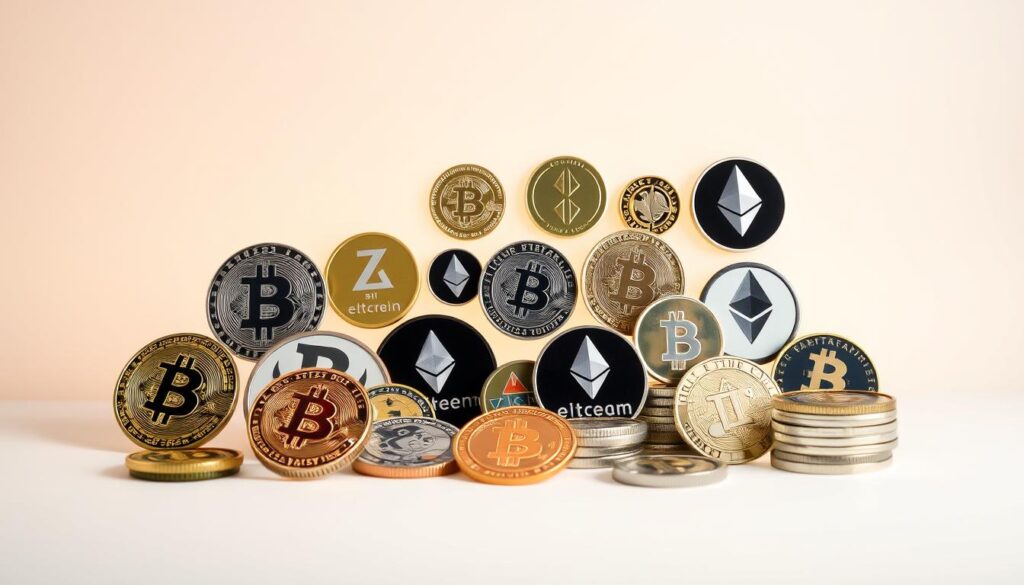
Let’s break down the 60/40 crypto cocktail from Wall Street’s playbook. Imagine Bitcoin as your vodka tonic – the clear base layer. The 60% foundation. Now sprinkle in altcoins like Ethereum (15%), Solana (10%), and meme coins (that last 15% is your “hold my beer” portion). This isn’t financial advice – it’s portfolio mixology.
The Sharpe Ratio: Your Crypto Soundboard
Think of Nobel-winning economist William Sharpe as your investment sound engineer. His ratio measures risk vs. reward like a producer balancing treble and bass. Want higher returns? Prepare for more volatility – it’s the crypto equivalent of turning the distortion up to 11.
| Portfolio Type | Bitcoin Allocation | Altcoin Mix | Risk Level |
|---|---|---|---|
| Safety First | 80% | 20% (ETH, ADA) | 🌡️ Low |
| Balanced | 60% | 40% (SOL, DOT, MEME) | 🌡️ Medium |
| Altcoin Adventurer | 40% | 60% (SHIB, PEPE, new DeFi tokens) | 🌡️ High |
When tracking crypto investments, CoinMarketCap is your Billboard Hot 100 – but remember MySpace’s top artists? Exactly. Here’s how to research cryptos like a music scout:
- Check the “streaming numbers” (market cap & trading volume)
- Read the “album reviews” (GitHub activity & whitepapers)
- Watch for “tour dates” (development milestones & exchange listings)
Pro tip: Your crypto ETF is the “greatest hits album” – pre-mixed by professionals. But where’s the fun in that? Build your own mixtape using crypto investment strategies that match your risk tolerance. Just remember – even Beethoven needed multiple instruments to create a symphony.
Crypto vs Other Investments
Traditional investing is like an arranged marriage – slow and careful. Crypto is like Tinder for making money. You can swipe right on Dogecoin at 2 AM and wake up to big gains. Or, you might lose a lot. Let’s look at this financial choice.
Market Speed Dating: Liquidity Face-Off
Selling a rental property takes a long time. But with crypto, you can sell fast, like tapping your phone. This fast selling is exciting but also scary, with risks like losing money.
| Investment Type | Entry Cost | Liquidity | Volatility | Passive Income |
|---|---|---|---|---|
| Real Estate (REITs) | $5,000+ | 3-6 months | 4/10 | 4% avg dividend |
| GICs | $1,000 | Locked period | 1/10 | 5.2% fixed |
| Crypto | $10 | Instant | 11/10 | 3-15% staking |
Centralized Exchanges: Financial Walmart or Digital Flea Market?
Understanding crypto exchanges is like choosing a dating app. CEX platforms like Coinbase offer safety and insurance. DEXs are like the wild west, where you might lose money.
REIT dividends are steady, but crypto rewards can change a lot. To make the same money as a $300k property, you’d need $40k in stablecoins at 30% APY. That’s a big risk.
Volatility: Your Personal Wolf of Wall Street
As Jordan Belfort said, “Money doesn’t just buy you a better life, it makes you do better.” Crypto takes this to extremes. Choosing your first cryptocurrency is like gambling with money that might not exist.
GICs offer 5.2% guaranteed returns. Crypto crashed by $2 trillion in 2022. Yet, we keep investing in crypto. What does that say about us?
Are you into slow, safe investments or fast, risky ones? There’s no right answer. It’s all about how you like to sleep at night.
Realistic Expectations
Let’s get real about crypto dreams. That “10x moonshot” you’re dreaming of? Uncle Sam and exchange fees will leave you with barely enough for a used Civic. Source 3’s tax tables show the harsh truth – a $10,000 gain turns into $6,000 after taxes in higher brackets. Pro tip: The IRS views crypto like property, so every trade might trigger taxes.
Storage is key, not just for your crypto. Hot wallets are like cash in a dorm mattress – safe until disaster strikes. Remember Mt. Gox? That $460 million crypto disaster is a lesson. Cold storage hardware wallets are your crypto vaults. This is the way (yes, we’re Mandalorian fans too).
| Security Method | Risk Level | Tax Implications |
|---|---|---|
| Hardware Wallet | Low (Offline) | No automatic reporting |
| Exchange Wallet | High (Hackable) | 1099-B forms generated |
| Paper Wallet | Medium | Manual tracking required |
Two-factor authentication is a must – it’s your crypto’s protection. Source 1’s fee charts show how fees can eat into your returns. A 2% trading fee on 10 trades is like a 20% wealth tax. Think day trading is smart?
So… should you invest in crypto? Only if you’re prepared to handle it like nuclear codes – with top security and constant watch. In this wild west, the IRS always gets paid first.
Conclusion
Imagine Jordan Belfort shouting “I’m not leaving!” while crypto fees eat away at your money. That’s the crypto world – trying to stay afloat when the market is crazy. When you start investing in crypto, remember that a small fee today could mean big gains later.
Three rules can help you succeed in crypto. First, keep your private keys safe, like they’re top-secret documents. Use hardware wallets from Ledger or Trezor instead of writing your password on a sticky note.
Second, use platforms like Coinbase to automate your investments. This way, you don’t let emotions control your decisions. Source 3 shows how panic-selling can lead to big losses.
Third, the blockchain keeps a record of everything, including your trades. That Dogecoin meme trade from 2021? The IRS remembers it. Good crypto security means more than just avoiding scams – it’s about building strong systems.
Beginners often make mistakes by treating crypto like a game of chance. Real wealth grows slowly, not overnight. Ask yourself: would your strategy work if Bitcoin stayed the same for three years? If not, you’re just taking risks.
The exit door is always open, but the real money is in staying and learning. The key to success is in understanding the game and sticking with it.