
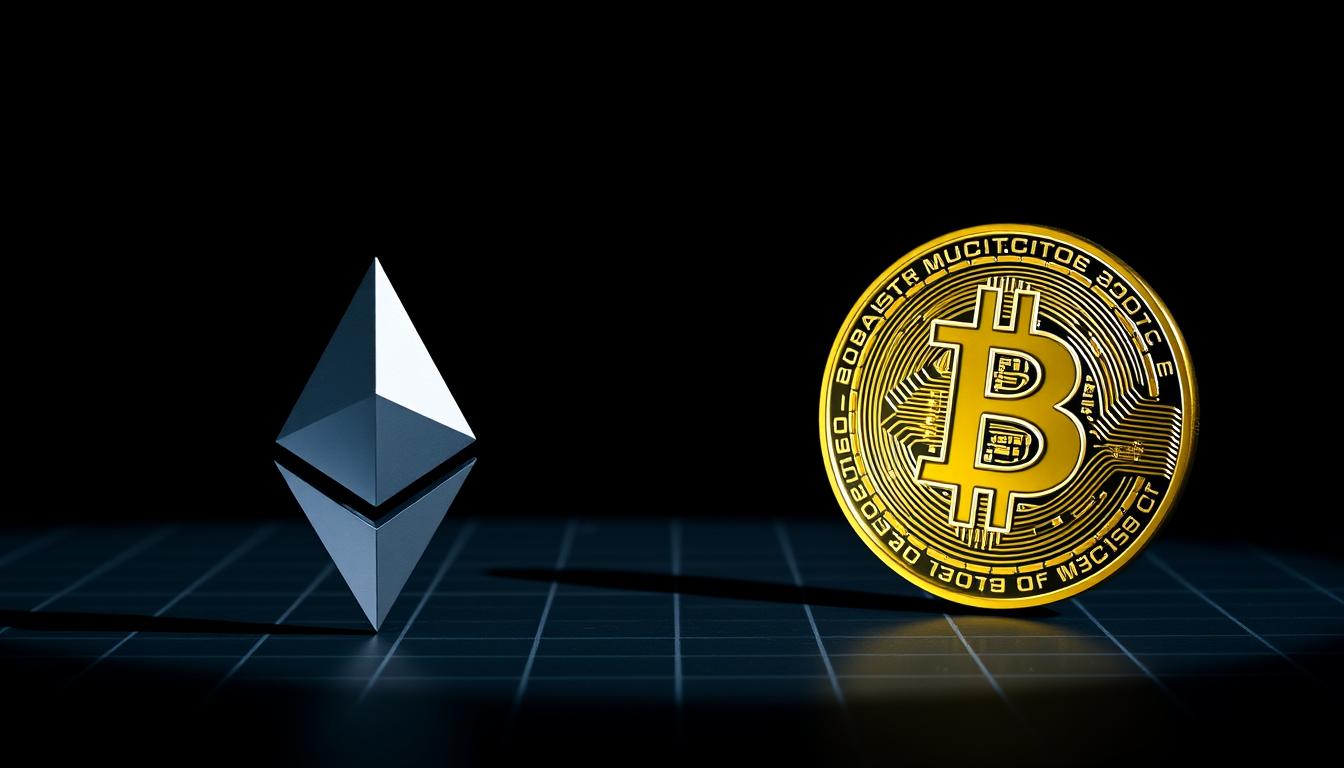
Imagine money that doesn’t need banks or governments. That’s what cryptocurrency is all about. It’s a system where trust is built into code, not given to institutions. Bitcoin is like a Swiss watch, all about precision and scarcity. Ethereum, on the other hand, is like a blockchain smartphone, letting us create new finance.
Why is this important? Think of your grandfather’s Rolex running apps that replace Wall Street. That’s what Ethereum offers. Bitcoin is like digital gold, while Ethereum lets developers create everything from smart contracts to virtual real estate. It’s like the difference between collecting rare coins and programming the future of ownership.
Both systems use decentralized networks, but they’re different. Bitcoin is focused on being a digital currency. Ethereum is a playground for developers to build new things. It’s like Neo vs Smith in The Matrix. We’re the ones in control, not machines.
Stay with us as we explore how these giants shape Web3. You’ll understand whether you prefer Bitcoin’s digital vault or Ethereum’s app store. No finance degree needed.
Origins and Purpose of Ethereum
Bitcoin came out in 2008, like a financial hero in tough times. Ethereum burst onto the scene in 2013, like a bright and bold thinker at a tech event. Vitalik Buterin’s whitepaper asked more than just “how are cryptocurrencies created?”. It boldly asked “why stop at digital cash when we could rebuild society?”
Vitalik Buterin, a young genius from Russia and Canada, saw Bitcoin’s blockchain as outdated. He wanted something more. He envisioned a decentralized computer where people could write smart contracts and create apps that no one could block. It’s like digital Legos meets constitutional law.
Ethereum’s crowdfunding in 2014 raised $18 million in Bitcoin. This was a huge amount, even for Silicon Valley. But it was different because it was backed by 1,000 crypto-anarchists, gamers, and Reddit philosophers. When Ethereum launched in 2015, it was more than just a new currency. It was a statement that code could replace contracts, corporations, and even countries.
Today, Ethereum’s world includes decentralized stock markets and AI-powered art galleries. Its biggest achievement? It turned blockchain into a social operating system. The real question isn’t how cryptocurrencies are made. It’s what happens when 8 million developers get to remake society.
How Ethereum Works
Imagine a global computer that never sleeps and can’t be censored. It runs on “if-then” statements, not corporate middlemen. That’s Ethereum’s magic – a decentralized system where code is law and apps run without CEOs. Let’s explore this digital wonderland.
Smart Contracts: The Vending Machines of Web3
Smart contracts are not like your lawyer’s PDFs. They’re self-executing programs that work like vending machines. Insert crypto, get deeds/NFTs/tokens. No “manager’s special” here – the rules are in the code. Miss a payment? Your digital asset gets taken back fast.
The Ethereum Virtual Machine (EVM) makes this possible. It’s like the blockchain’s CPU, processing millions of contract executions daily. When you interact with a smart contract, you’re renting computation time worldwide – no AWS bill needed.
| Traditional Contract | Smart Contract | Real-World Example |
|---|---|---|
| Requires lawyers | Runs on code | Apartment lease becoming NFT |
| Enforced by courts | Enforced by blockchain | Auto-refunding concert tickets |
| Weeks to execute | Minutes to complete | Instant stock dividends |
ERC-20: The Lego Bricks of Crypto
Most smart contracts follow the ERC-20 standard – the USB-C of crypto tokens. This blueprint allows:
- Seamless token transfers between wallets
- Interoperability with decentralized exchanges
- Customizable token economics (inflation, burns)
When CryptoKitties clogged Ethereum in 2017, it was more than cat memes. It was thousands of smart contracts fighting for space. Today, dApps handle everything from billion-dollar loans to play-to-earn games, all thanks to these agreements.
Want to build your own? You’ll need Solidity – Ethereum’s programming language. It turns coffee into code into contractual obligation. Just remember: bugs here can cost millions. No pressure.
Differences: Ethereum vs Bitcoin
Imagine Bitcoin as a vintage muscle car that eats a lot of fuel. Ethereum is like a Tesla that changes the game. This ethereum vs bitcoin battle is not just about money. It’s about different ways to use technology.
Bitcoin uses a lot of electricity, like a digital Cookie Monster. It eats as much as small countries use in a year. This is like using old steam engines in today’s world.
Ethereum changed to proof-of-stake in 2022. This is like switching to solar power. Now, validators use ETH instead of burning through graphic cards. This cuts energy use by 99.95%.
| Feature | Bitcoin | Ethereum |
|---|---|---|
| Consensus | Proof-of-Work | Proof-of-Stake |
| Energy Use | 136 TWh/year | 0.01 TWh/year |
| Transaction Speed | 7 TPS | 30 TPS |
| Primary Use | Digital Gold | Programmable Money |
Bitcoin is slow, taking 10 minutes to confirm a transaction. Ethereum is fast, doing it in seconds. This is great for people who like quick answers.
- Bitcoin: The stubborn archivist preserving financial history in digital amber
- Ethereum: The mad scientist’s playground where code becomes law
Bitcoin is like a treasure hoard, keeping value safe. Ethereum creates value with smart contracts. It’s like a place where money and code meet.
In this ethereum vs bitcoin battle, there’s no clear winner. Bitcoin is for those who want digital gold. Ethereum is for building the future. Remember, crypto changes fast, like a caffeine rush.
Major Uses of Ethereum Today
Ethereum is more than just a savings bond. It’s a digital marketplace where code replaces middlemen. Here, major cryptocurrencies are the building blocks for financial freedom. Imagine Wall Street brokers trading alongside anime fans, all using ETH gas fees.

- DeFi’s Wild West: Decentralized finance handles $47 billion in assets. It offers interest rates that make traditional banks look bad. You can borrow, lend, or gamble on crypto futures without KYC forms or banker hours.
- NFT Mania: That Bored Ape you mocked? Its owner just used it for a $1M loan. Ethereum’s NFT standard turned jpegs into tradeable assets, creating a $10B market where digital art and status symbols meet.
- The MEV Underworld: Miner Extractable Value bots exploit milliseconds in transaction ordering. It’s like high-frequency trading meets Mr. Robot. It’s controversial, profitable, and 100% native to Ethereum’s ecosystem.
Ethereum enables programmable value at scale. Traditional finance needs lawyers and paperwork. Ethereum just needs Solidity code and enough ETH to keep the network running. The trade-off? Gas fees that change like a crypto influencer’s Twitter following.
| Traditional System | Ethereum Equivalent | Twist |
|---|---|---|
| Stock Exchanges | DEXs (Uniswap) | 24/7 trading with cat meme tokens |
| Banks | Lending Protocols (Aave) | Earn interest in seconds, not years |
| Art Galleries | NFT Marketplaces (OpenSea) | Provenance tracked via blockchain |
The real magic? Ethereum’s uses keep evolving. Yesterday’s ICO platform became today’s DeFi backbone and tomorrow’s metaverse currency. While Bitcoin hoards value like digital gold, Ethereum moves value – with all the chaos and creativity that implies.
So next time someone scoffs at “jpegs with blockchain,” remind them: Ethereum isn’t just hosting the future of finance. It’s running a three-ring circus where code is law, apes are collateral, and the ticket price is denominated in gwei.
How to Buy and Store ETH
Buying Ethereum is not like using a credit card. It’s more like unlocking a digital treasure chest. We’ll explain it in simple terms.
Step 1: The Crypto On-Ramp
Centralized exchanges (CEXs) like Coinbase are like the mall food courts. They’re familiar and regulated but a bit pricey. Here’s what you need to do:
- Create an account (think digital passport)
- Verify your identity (hello, selfie cam)
- Connect a payment method (bank accounts work)
If you prefer privacy, try decentralized exchanges (DEXs) like Uniswap. They’re like crypto speakeasies. No KYC paperwork is needed – just connect your wallet and swap tokens.
Step 2: Digital Fort Knox
Your ETH isn’t “in” a wallet like your Netflix account is “in” your password manager. Wallets just protect your cryptographic keys:
- Hot wallets (MetaMask, Trust Wallet): The jeans-pocket option – convenient for daily spending, risky for life savings
- Cold wallets (Ledger, Trezor): The titanium-buried-in-your-backyard option – hacker-proof but about as portable as a fax machine
Pro tip: Losing your hardware wallet is like Thanos snapping your car keys. Unless you’ve memorized that 12-word seed phrase, your ETH becomes cosmic dust.
Why does this matter? Because crypto security isn’t about antivirus software. It’s about understanding that you’re now your own bank. Unlike traditional banks, there’s no FDIC insurance if you accidentally send your life savings to a Nigerian prince’s wallet address.
Common Ethereum Scams and How to Avoid Them

Exploring Ethereum can feel like trying to avoid TikTok trends at a family reunion. It’s tough and tiring. Here are three scams that make Ocean’s Eleven seem like child’s play:
1. Liquidity Vampire Attacks: Picture a DeFi project promising 900% APY but vanishing quickly. These scams use smart contracts to drain your funds. Your ETH becomes their way out.
2. Honeypot Tokens: It’s like dating app catfishing in crypto. You buy a token, but it’s worthless. The contract traps your funds while the creators make off with your money.
| Scam Type | Red Flags | Defense Strategy |
|---|---|---|
| Phishing Links | “Urgent” wallet verification emails | Bookmark legitimate sites |
| Fake Airdrops | VitalikButerin69@gmail.com | Never share seed phrases |
| Rug Pulls | Anonymous dev teams | Check audit reports |
3. Gas Fee Swindles: DApps trick you into paying high fees. You might end up paying $900 for an NFT of a sad cartoon frog.
Here’s how to stay safe:
- Use hardware crypto wallets – they’re like digital Fort Knox
- Check contract addresses carefully
- Use transaction previews to spot scams
In Web3, you are the security. Treat every opportunity with caution. Your crypto wallet is more than a piggy bank. It’s your digital shield that needs constant watch.
Future Developments (ETH 2.0)
Imagine if the Matrix upgraded itself while Neo was trying to understand the red pill. That’s what ETH 2.0 is like. It’s not just a simple update. It’s a big change that makes the blockchain better and uses less energy.
With proof-of-stake, you can become a digital landlord. Your ETH acts like a high-tech savings bond that helps protect the network. Validators earn rewards for keeping things honest, which is pretty cool.
Ethereum is also working on sharding. This is like slicing a pizza into 64 pieces. Each piece handles transactions on its own, making Ethereum faster and more efficient.
Then there’s zk-Rollups, which are like blockchain origami. They bundle lots of operations together, making transactions cheaper and faster. It’s like fitting a lot of data into a small space.
Want to know more? Check out our complete guide to Ethereum’s upgrade. It explains how these changes could make big companies like Visa nervous. The future is exciting and full of possibilities.
FAQs
Can Ethereum dethrone Bitcoin? Think of it like a Marvel movie. Bitcoin is the OG superhero, and Ethereum is the tech-savvy successor. They solve different problems, so it’s not a fair comparison.
Should you mortgage your house for NFTs? That’s a question for another time. NFTs are like experimental collectibles, not retirement plans. Treat them with caution.
The “lost password = lost millions” stories are true. Your ethereum wallet is not a place for random notes. Use hardware wallets like Ledger or Trezor. Seed phrases are your digital Fort Knox’s backup.
We won’t predict ETH prices. Focus on blockchain’s big picture. Could Ethereum be Web3’s backbone? Maybe. But will your wallet make you a yacht owner by 2025? Doubtful.
Smart investors look at how tech changes industries. What’s hype and what’s real utility? That’s where the magic is. Got more questions? Hit us up in DMs.