
The world of cryptocurrency is exciting, but it also comes with dangers. Scammers create fake digital tokens to trick investors. These scam coins look real, with nice websites and marketing tricks.
Scams often promise high returns with no risk. The SEC and CFTC warn about “zero risk” claims. Real investments have risks, and no one can promise profits.
Be wary of unsolicited messages. If someone contacts you on social media or email to invest fast, it’s probably a scam. Always doubt offers that seem too good to be true. For more tips, check out this guide on cryptocurrency scams.
Visual Checklist (Warnings in Whitepapers, Social Signals)
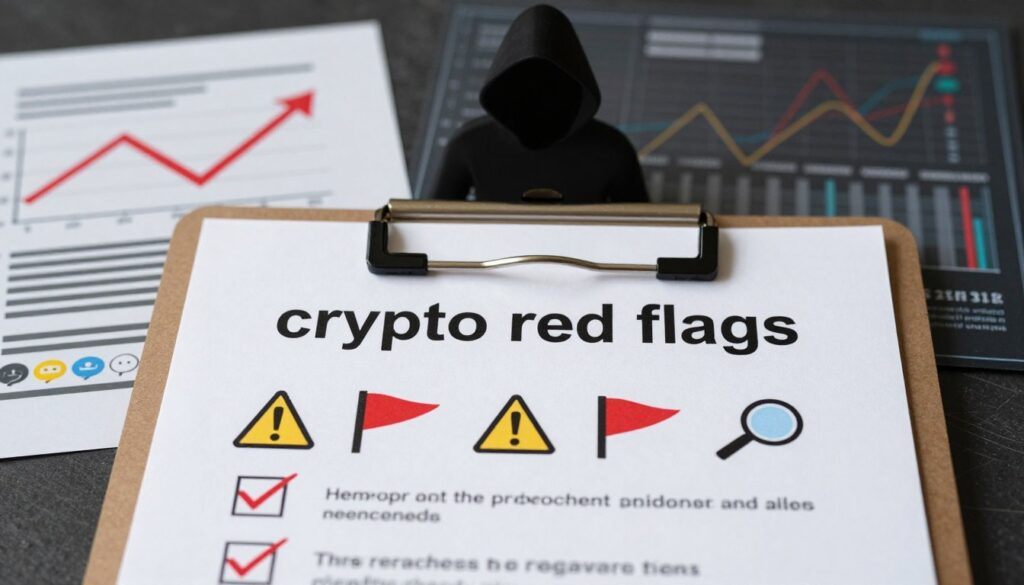
Finding crypto red flags is key for investors in the cryptocurrency market. Look closely at how a cryptocurrency is presented. A good project will have a clear whitepaper that explains its tech, use, and tokenomics.
Scam coins often have whitepapers with spelling mistakes and unclear promises. They might copy from other projects or use hard words to hide their emptiness. Here’s a checklist to check if a project is real:
| Checklist Item | What to Look For | Red Flags |
|---|---|---|
| Whitepaper Quality | Clear, concise language | Spelling errors, plagiarized content |
| Team Credentials | Verifiable LinkedIn profiles | Stock photos, fake identities |
| Social Media Activity | Genuine engagement and discussions | Bot-driven hype, fake endorsements |
| Website Security | HTTPS connection, professional design | Pop-ups demanding investment |
Then, look at the team. Do the founders and developers have real credentials? Scammers often use fake photos or names. Also, check social media: a sudden follower surge without real talk is likely bots.
Watch out for fake celebrity endorsements. Scammers might say Elon Musk or Vitalik Buterin are backing them. The website is also important: it should be secure, look professional, and have clear contact info. If it’s full of pop-ups asking for money or promises of easy profit, it’s a scam.
Lastly, look at the community. Real projects have open talks on Reddit or Discord. Scam coins often delete negative comments. This checklist helps you avoid fake altcoins. For more on scams, see this guide or introductory resources.
Famous Scam Coin Examples
It’s key to spot scam altcoins early, as many have ruined investors. OneCoin, started by Ruja Ignatova, is a prime example. It was a huge Ponzi scheme, promising big returns with a fake blockchain. It raised over $4 billion before Ignatova disappeared in 2017.
Bitconnect is another warning story. It drew in investors with a lending program that promised up to 40% monthly returns. But when it fell apart in 2018, its token’s value dropped to almost nothing, hurting many investors.
Recently, the SEC and CFTC have cracked down on fraudsters like Onwuemerie Ogor Gift and Kelvin Usifoh. They ran fake sites like wealthcurrency.com and boomcurrency.com, offering 20-50% returns. After stopping communication and asking for more money, they were charged with wire fraud and money laundering.
These cases show common scam tactics: false promises, unproven tech, aggressive marketing, and ignoring rules. Learning from these scams helps you avoid similar traps and keep your investments safe.
Safe Research Routines
When exploring cryptocurrency, it’s key to follow safe research steps. Always do a deep online search before investing. Use keywords like “scam,” “review,” or “complaint” along with the project name. This helps understand the project’s reputation.
Then, check official sites like Investor.gov and the CFTC’s RED List. These sites show if the project’s leaders are licensed and if they’ve faced any issues.
Look closely at the project’s whitepaper. It should clearly explain the problem, the solution, and the token’s purpose. A detailed whitepaper suggests a genuine project.
Verify the team’s background too. Use LinkedIn to see if the founders have real careers and experience. Legitimate teams usually have clear, verifiable histories.
Joining Discord or Telegram channels can give more insights. Notice how open the team is to questions. If they block doubts, it might indicate a lack of transparency.
Be wary of sudden investment offers, especially from dating apps. The FTC says romance scams often involve fake crypto deals. Always be cautious of such offers.
Lastly, only invest what you can afford to lose. Don’t rush into decisions. By following these steps, you can lower the risk of falling for scams and create a safer crypto portfolio.

Where to Report Scams
If you think you’ve fallen for a scam coin or lost money, act fast. Reporting it quickly helps catch fraudsters and keeps others safe.
The Federal Trade Commission (FTC) is key for consumer fraud. You can report it at ReportFraud.ftc.gov. For investment scams, the Securities and Exchange Commission (SEC) is where to go. Visit sec.gov/tcr to share tips. The Commodity Futures Trading Commission (CFTC) handles commodities fraud. Check out CFTC.gov/complaint to report.
The Internet Crime Complaint Center (IC3) is run by the FBI. It’s great for reporting cryptocurrency blackmail or extortion. Also, tell your cryptocurrency exchange about the scam. They might freeze the scammer’s account or give law enforcement details.
While getting your money back is unlikely, your report is crucial. It helps authorities stop scams. Keep all your scam-related documents ready. For tips on spotting scams, check out this resource.