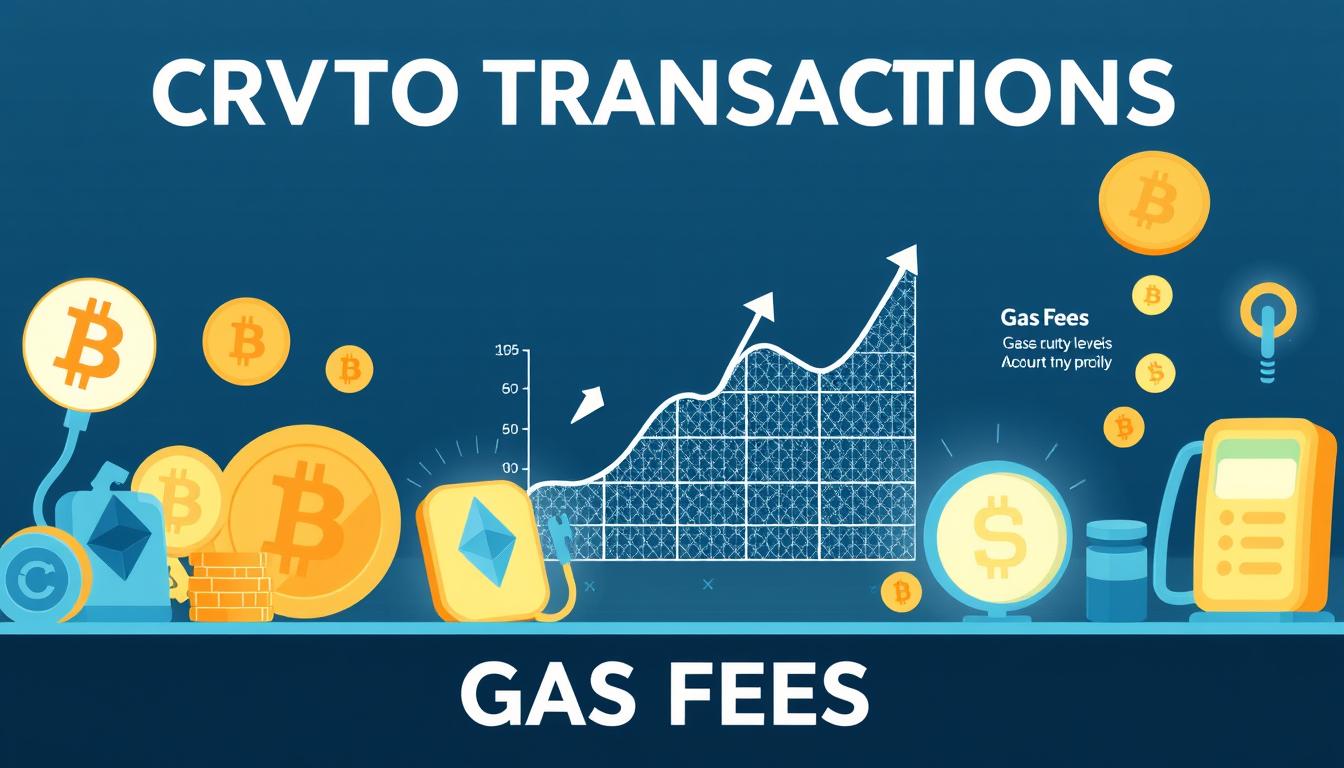
Do you remember when swapping tokens could cost up to eighty-six dollars? That’s a thing of the past. Ethereum’s 2025 Dencun upgrade has cut network fees by about 95%. Now, that same swap might only cost you less than forty cents.
Understanding transaction costs is now more important than ever. On networks like Ethereum, “gas” is the fuel. It’s the payment for the work needed to process your action, measured in tiny units called gwei.
These fees do more than just cost you money. They pay network validators for their work. They also help prevent spam attacks and let users prioritize their transactions. For more on this, check out our ultimate guide to gas fees explained.
We’re here to give you a practical guide to this world. We’ll explain why costs happen and how to reduce them. This way, you can transact with confidence and save more money.
Paying Less for Transfers
The secret to saving on transfers is in timing, technology, and technique. Many believe crypto transaction costs are set, but they’re not. You can control your spending.
First, understand that gas fees change. A clear gas fee explained shows it’s a market price, not a tax. This price shifts with demand, so you can plan your transfers.
Your first move is timing. Network congestion follows patterns. Try sending money on weekends or late at night in the U.S. for lower fees. It’s a simple trick.
The second move is technology. Layer 2 solutions are efficient. They handle transactions off the main chain, cutting costs and wait times. We’ll look at L2 options soon.
Your third move is technique. Batching transactions is key. Instead of sending ten separate transfers, bundle them. You pay one fee, not ten. It’s a money-saving tactic for frequent users.
We can time our moves, use efficient tech, and refine our technique. This puts you in control. Let’s compare these strategies.
| Strategy | Key Action | Typical Savings | Best For |
|---|---|---|---|
| Timing | Schedule transfers for weekends or off-peak hours (e.g., 1 AM – 5 AM ET) | 20% – 50% | One-off, non-urgent transfers and swaps |
| Technology | Use Layer 2 networks (like Arbitrum, Optimism) or sidechains | 80% – 95% | Regular trading, DeFi interactions, and frequent activity |
| Technique | Batch multiple actions into a single transaction | 60% – 90% on subsequent actions | Power users, airdrop claims, and managing multiple tokens |
Mastering batching transactions and other strategies makes cost management easy. You stop reacting to high fees and plan ahead. Next, we’ll explore how gas works and how to automate these strategies.
What “gas” covers and why it fluctuates
Gas fees are not random. They are the lifeblood of blockchain networks. Imagine a blockchain as a global computer shared by everyone. Every action or smart contract uses resources on this network. Gas is the fee for using those resources.
This system has two main goals. First, it ensures security. It makes it costly to flood the network with useless actions. This keeps the system safe from attacks that could slow it down.
The second goal is resource allocation. It rewards validators and miners for their work. They use powerful tools and electricity to process transactions. Gas fees pay them for their efforts, making the system fair.
If gas fees stayed the same, the system would crash. Their change is a good thing. Three main things cause this change.
Network Congestion is the main reason. Each block can only hold so much. When lots of people want to use the network at once, prices go up. This is like bidding on a block space.
Transaction Complexity also affects the cost. Simple actions like sending money need little work. But complex actions, like using DeFi protocols, need more. This means they cost more in gas units.
Block Utilization Mechanics also play a part. Validators want to fill blocks to earn more. When blocks are full, prices go up. Changes like Ethereum’s EIP-1559 adjust fees based on this.
To understand this better, different actions need different amounts of work. Here’s a table showing common Ethereum operations:
| Operation | Typical Gas Units | Description |
|---|---|---|
| Simple ETH Transfer | 21,000 | Moving native cryptocurrency from one address to another. This is the baseline, least complex action. |
| ERC-20 Token Transfer | ~65,000 | Sending a standard token (like USDT or UNI) involves interacting with a smart contract, requiring more work. |
| NFT Mint (Basic) | ~80,000 – 150,000 | Creating a new NFT on-chain consumes significant resources for data storage and contract execution. |
| DeFi Swap (Uniswap) | ~100,000 – 200,000 | A token swap on a decentralized exchange involves multiple contract calls and price calculations. |
| Complex DeFi Interaction | 200,000+ | Actions like providing liquidity, staking, or yield farming can involve several sequential contract calls. |
Your total cost is Gas Units Used * Gas Price per Unit. The price per unit changes with demand. So, a complex DeFi swap costs more during busy times because it uses more units and each unit is pricier.
Getting this helps you manage costs better. High gas fees are not a penalty. They’re the cost of using a secure, decentralized computer when it’s busy. Now, you can plan your transactions more wisely.
How base fee + tip works (EIP‑1559 style)
Learning about EIP‑1559 is essential for getting Ethereum transaction costs. This upgrade changed the old system to a new one. Now, your fee is split into a base fee and a tip.
The Base Fee is the cost to get your transaction on the Ethereum ledger. An algorithm sets this price based on network demand. If the network is busy, the base fee goes up. When it’s not, it goes down.
Also, every block burns the base fee. This burning makes Ethereum’s supply decrease.
The Priority Fee, or tip, is optional. You can add it to get your transaction processed faster. It’s like a tip for quicker service.
Wallets also let you set a Max Fee. This is your limit. The network won’t charge you more than this. If your total fee is too high, your transaction waits.
In MetaMask, you can see these fees clearly. You can adjust your tip slider. This helps you make smart choices.
When should you increase your priority tips? For regular transfers, a small tip is enough. But for urgent trades or popular apps, a higher tip is needed. It helps your transaction get processed faster.
The EIP‑1559 model is great. It makes fees predictable and lets you control speed and cost. By understanding this system, you can manage your gas prices better.
Timing, batching, and fee automation strategies
Crypto users can save money by planning their actions. This section shares tips to control your transaction costs.
Timing your transactions is key. Fees drop when the network is less busy. This usually happens on weekends and late at night in North America and Europe.
This table shows when the network is busy or not:
| Period | Typical Congestion | Recommended For |
|---|---|---|
| Weekday Business Hours (9 AM – 5 PM EST) | High | Urgent, time-sensitive transfers only |
| Weekends (Saturday & Sunday) | Low | Batch processing, non-urgent moves |
| Late Night / Early Morning (12 AM – 6 AM EST) | Very Low | Scheduling all routine transactions |
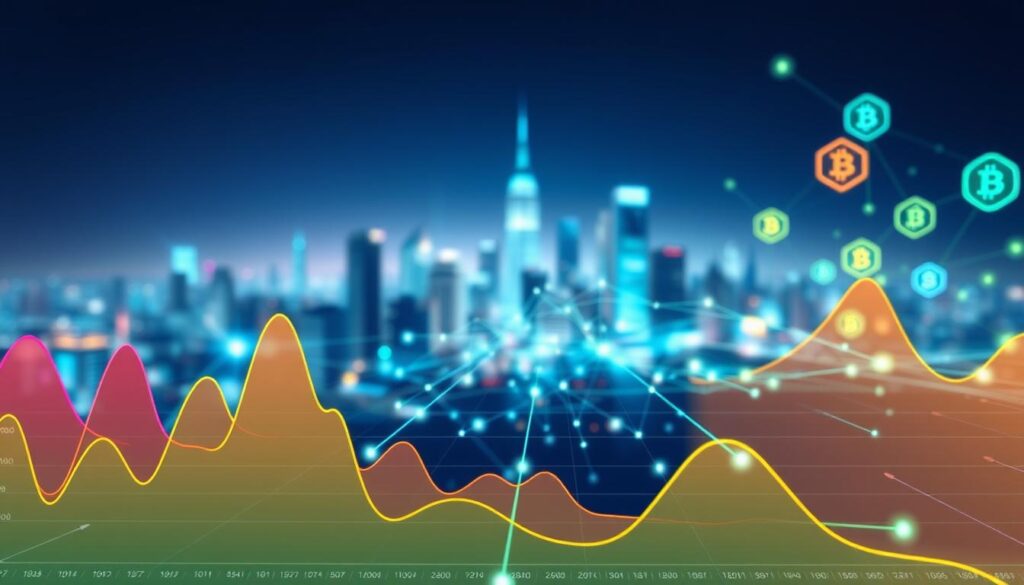
Batching transactions is another smart move. Grouping several actions into one transaction saves money. This way, you only pay one fee for all actions.
Tools and advanced wallets use batching to lower costs. For example, you can approve, swap, and stake tokens in one transaction. This saves both time and money.
To use these strategies, you need the right tools. Professional dashboards provide real-time data.
- Etherscan Gas Tracker: Offers a live chart showing current base fee and priority tip ranges for different confirmation speeds.
- ETH Gas Station: Features a color-coded heatmap that visually represents congestion levels throughout the day, making optimal timing obvious.
Learning to read a gas heatmap is easy. Green areas mean low fees, while red means high demand. Schedule your transactions when it’s mostly green.
Use wallet features to automate your decisions. Most wallets let you set custom fee levels. Choose between “slow,” “standard,” and “fast” based on your needs.
For non-urgent moves, set a lower priority tip. This way, your transaction will process when fees are lower. This makes you an active cost manager.
By timing, batching, and using free tools, you can save a lot. These tips help you keep more of your money working for you, not just paying for network access.
When to use L2s or alt rails for cheaper moves
Imagine cutting your transaction costs by over 90% without leaving the Ethereum ecosystem. This is what Layer 2 solutions promise. When mainnet gas prices are high, the best cost-saving move is to use a scaling network built on Ethereum.
Layer 2 networks, or L2s, are not separate blockchains. They are extensions of Ethereum. They process transactions in bulk away from the congested mainnet. The final, compressed proof of these transactions is then posted back to Ethereum for security. This process inherits Ethereum’s robust security while dramatically reducing L2 fees.
Two primary technologies power most L2s today: Optimistic Rollups and Zero-Knowledge (ZK) Rollups. Their core difference lies in how they prove transaction validity to the mainnet.
| Feature | Optimistic Rollups | ZK-Rollups |
|---|---|---|
| Core Mechanism | Assume transactions are valid (“optimistic”) but allow a challenge period for fraud proofs. | Use cryptographic validity proofs (ZK-proofs) to instantly verify correctness. |
| Time to Finality | ~7 days for full withdrawal to mainnet due to challenge window. | Near-instant (minutes) after proof is submitted. |
| Typical Cost Savings | 90-95% cheaper than Ethereum mainnet. | 95-99% cheaper than Ethereum mainnet. |
| Key Examples | Arbitrum, Optimism, Base | zkSync Era, Starknet, Polygon zkEVM |
| Best For | General DeFi, NFT trading, and applications where a week-long withdrawal delay is acceptable. | Payments, exchanges, and use cases requiring fastest possible finality. |
Data shows these platforms reduce fees by 90% to 99% compared to Layer 1 Ethereum. This makes them the default choice for virtually all routine crypto activity.
You should use an L2 for:
- Daily DeFi swaps and yield farming
- Minting and trading NFTs
- Frequent token transfers between wallets
- Interacting with decentralized social apps or games
Moving assets to an L2 requires a one-time “bridge fee” to cover the mainnet transaction. This small upfront cost is typically recouped after just a few transactions on the low-fee network.
Beyond L2s, entirely separate Layer 1 chains like Solana or BNB Chain are “alt rails.” They offer low fees by design but operate with different security and decentralization models.
Choosing an alt L1 means engaging with a new ecosystem. You trade Ethereum’s maximal security for potentially higher throughput and different developer communities. For users deeply embedded in Ethereum, L2s provide the smoothest path to massive fee reduction.
For long-term cost planning, adopting a primary L2 for your daily transactions is the most effective strategy. It turns unpredictable, high mainnet L2 fees into a relic of the past.
Cost planning for investors: moving size, slippage, bridge fees
For investors moving big amounts of money, crypto transaction costs become a big deal. Big transactions, like rebalancing a portfolio on Uniswap or SushiSwap, use more gas units. The cost goes up as the amount moves up.
Slippage on decentralized exchanges is a direct cost. A slow transaction can cost you more. Using priority tips can help. It often saves you more than the extra tip paid.
Bridging assets to an L2 like Arbitrum or Optimism has a one-time fee. You need to weigh the costs. If saving gas on L2 transactions is more than the bridge fee, it’s a good move.
Knowing how to manage these costs—like gas, slippage, and bridging—gives you an edge. It lets you move your capital smartly.