
Imagine a digital world where code is money and trust is based on math. Cryptocurrency is more than just money. It’s a challenge to banks, filled with tech terms that might confuse you.
So, what are we buying? Let’s dive into the basics.
Crypto uses a decentralized ledger system called blockchain. It’s like a Google Sheet shared by thousands of computers. Any change is verified by the network.
Bitcoin is like digital gold. It’s rare, durable, and great for keeping value. Ethereum is different. It’s like a vending machine for finance, making smart contracts that automate tasks.
But, crypto is also very volatile. Remember the crypto winter of 2022? It was wild. Blockchain is secure, but the market can be unpredictable.
So, why is crypto so popular? It’s because it’s changing how we own things. Whether you like Bitcoin’s stability or Ethereum’s new ideas, knowing about crypto is key for the future.
Prerequisites: What You Need Before Buying
Imagine getting ready for a Mars trip, but instead of oxygen, you’re packing digital stuff. Crypto investing isn’t as hard as it seems. But, many people treat their private keys like they’re disposable. It’s time to change that.
First off: identity verification. Exchanges aren’t secret clubs. They’re like exclusive places with strict rules. You’ll need:
- Government-issued ID (they’ll check if it’s real)
- Proof of address (no, “Metaverse Plaza” doesn’t count)
- A selfie to prove you’re alive (sunglasses are okay, but the rules are strict)
Next: risk management strategies that are as sharp as a Wall Street expert’s tools. Our top tips:
- Don’t use money meant for food (trading on ramen is not a good plan)
- Spread your investments (don’t just follow Elon’s tweets)
- Keep your crypto in a cold storage wallet (storing it on exchanges is risky)
Now, let’s talk about security hygiene. Your crypto wallet seed phrase is super important. Write it down. Carve it into stone. I once met someone who kept his in a safety deposit box… inside another. It’s overkill, but it worked.
Lastly, think of this prep as getting ready for space. If you miss one step, you’re in trouble. The market doesn’t care about your “hodl” jokes when your money is leaking.
Choosing a Reliable Crypto Exchange
Imagine if Amazon sold Bitcoin – that’s the user experience you should demand from crypto exchanges. The difference between platforms like Coinbase and dark web marketplaces isn’t just about legality. It’s the gap between “one-click checkout” and “hope you brought a VPN and a prayer.”
Coinbase works like the Apple Store of crypto – polished, intuitive, and perfect for beginners. Binance offers a wide range of trading pairs, making it a favorite among traders. But remember the FTX collapse: even Sam Bankman-Fried’s “effective altruism” couldn’t save users from becoming modern-day Icaruses.
Robinhood’s 2021 Dogecoin circus was a mess. It halted trading during peak frenzy like a bouncer closing the club. Binance, on the other hand, kept liquidity high, ready for any crypto mob.
| Platform | UI/UX | Liquidity | Track Record |
|---|---|---|---|
| Coinbase | Grandma-friendly | High (for majors) | IPO’d, no major scandals |
| Binance | Overwhelming buffet | Ocean-deep | Regulatory tussles |
| Robinhood | Slick but shaky | Puddle-level | 2021 Dogecoin freeze |
Three non-negotiable features when choosing where to buy crypto:
- Insurance: Does the exchange have more safeguards than a Tesla autopilot system?
- Withdrawal Options: If you can’t move your crypto off-platform, you’re just renting digital beans.
- Transparency: Look for audits that aren’t performed by the CEO’s pet ferret.
The crypto exchange landscape changes fast. Today’s leader could be tomorrow’s drama – diversify your platforms like you’d diversify your meme stock portfolio.
Setting Up Your Account and Wallet
Creating your crypto identity is like building a digital Fort Knox with a TikTok profile attached. It needs strong security and easy use. Let’s explore this modern challenge.
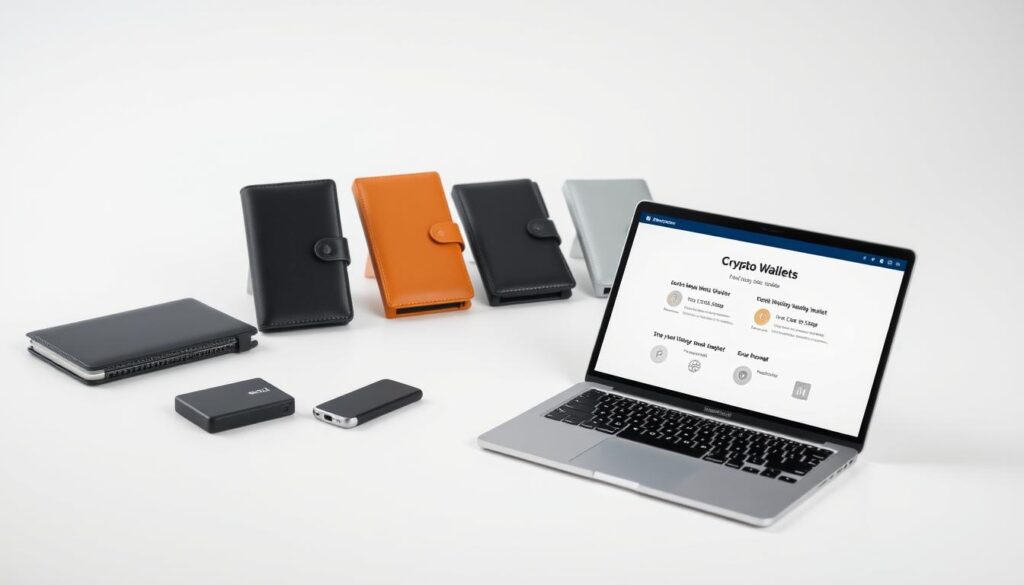
- Hot wallets: Always online, great for quick trades. But, they’re not as secure as a diary with a “DO NOT READ” sticker.
- Cold wallets: Offline devices that keep your crypto safe. They’re like the underground bunker option.
Most exchanges make you use their hot wallet first. Think of it as a temporary holding cell. Pro tip: Move 90% of your assets to cold storage after you learn how to buy cryptocurrency. Your future self will appreciate it when the next exchange goes down like FTX.
The authentication tango:
- Turn on 2FA right away (but avoid SMS – it’s like using a screen door on a submarine)
- Get an authenticator app (Google/Microsoft Authenticator are better than your ex’s promises)
- Write down recovery codes on real paper – not in your Notes app with grocery lists
Your private keys are not suggestions. They’re the DNA of your crypto life. Lose them, and you’re not just locked out – you’re digitally dead. Set up your wallet like you’re protecting the nuclear codes, not organizing a Spotify playlist.
Final reality check: If your security setup doesn’t make you feel a bit paranoid, you’re doing it wrong. The crypto world rewards careful preparation and eats the careless alive. Welcome to your new life – part Wall Street trader, part cybersecurity ninja.
Funding Your First Purchase: Payment Methods
Choosing how to fund your crypto account is like picking a drink at a craft cocktail bar. Some options might look tempting but could leave you with financial woes. Let’s explore the details before you make your choice.
ACH transfers are like the IPAs of crypto funding – slow but affordable. They’re great for buying Bitcoin without high fees. Pro tip: These transfers cost 0.5-1.5% compared to credit cards’ 3-5%. That’s a big difference.
Credit cards are like the Four Loko of crypto – they offer instant gratification but come with harsh consequences. You can buy Bitcoin anytime, but 24% APR can be tough to handle. Soon, 37% of Visa cards will let you buy crypto, but check if your issuer is ready.
| Method | Fees | Speed | Best For |
|---|---|---|---|
| ACH Transfer | 0.5-1.5% | 3-5 days | Strategic investors |
| Credit Card | 3-5% + interest | Instant | FOMO emergencies |
| Visa Crypto Card | 4.5% (avg) | Instant | Rewards chasers* |
*See footnote: “Rewards” = 1% cash back vs 4.5% fees. Impatience is your enemy, not math. Most crypto exchanges offer fee calculators. Use them wisely.
Payment methods greatly affect your crypto journey’s success. Choose wisely – your future self will either celebrate or regret.
Step-by-Step: Buying Bitcoin, Ethereum, and Others
Buying your first crypto is like swiping right on Tinder. But instead of awkward dates, you face volatility. And instead of wingmen, you have market orders. Here’s how to buy bitcoin, ethereum, and more without draining your bank account.
The Hustler’s Playbook:
- Log into your exchange (the cooler cousin of your banking app)
- Navigate to the trading pair section – BTC/USD for Bitcoin, ETH/USD for Ethereum
- Set your order type: Market buys execute instantly like impulsive Amazon purchases, while limit orders let you play hard-to-get with specific price targets
- Review fees like you’re reading Terms of Service – boring but critical
- Confirm faster than Elon Musk deletes tweets
Bitcoin and Ethereum are the big names in crypto for a reason. They’re like Beyoncé and Jay-Z. New coins might seem exciting, but 90% of altcoins underperform BTC within 12 months.
Order Book Tinder:
The numbers on exchanges are like a crypto singles bar. Green bids want to buy, red asks want to sell. Swipe right when spreads tighten like a good poker hand. Swipe left when volatility looks like a cardiogram during an espresso binge.
Meme Coin Intervention:
We know you’re tempted by Dogecoin “for the lulz.” But buying Shiba Inu tokens because they’re cheap is like ordering sushi from a gas station. It’s fun for Twitter, but bad for your portfolio. Stick to assets with real whitepapers, not just Elon-approved memes.
Final thought: Crypto markets never sleep, but your FOMO should. Whether you buy bitcoin as digital gold or ethereum as the internet’s new backbone, treat every trade like a mic drop. It should be calculated, rehearsed, and ready for applause.
How to Store Coins After Buying
Storing crypto is like planning a Ocean’s 11-proof vault for your digital gold. You’re both Danny Ocean and the casino. Get it wrong, and you might lose everything. Let’s look at your options quickly.
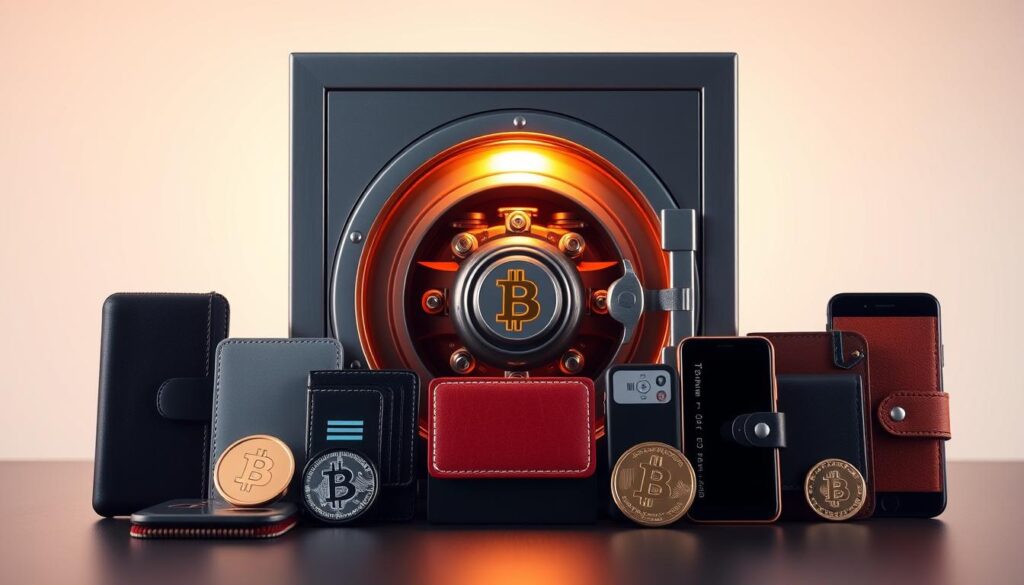
The debate is between hot and cold wallets. Hot wallets are like cash in your back pocket at Coachella – convenient but risky. Cold storage is like burying treasure in the desert, minus the Breaking Bad issues.
| Storage Type | Security Level | Best For |
|---|---|---|
| Exchange Wallets | Paper mâché fort | Day traders who enjoy adrenaline |
| Mobile/Web Wallets | Screen door security | Small, frequent transactions |
| Hardware Wallets | Digital Fort Knox | Long-term HODLers |
| Paper Wallets | Analog encryption | Preppers and maximalists |
Hardware wallet adoption will grow 217% by 2025. Exchange hacks are increasing faster than Taylor Swift concert ticket sales. Setting up a Ledger Nano X is easy – it’s like unboxing the smallest nuclear football. Twelve-word recovery phrases are your “shovel and coordinates” moment.
Phishing scams have evolved from Nigerian prince emails to deepfake YouTube tutorials mimicking Elon Musk. Last month, hackers stole $4.2M from users who clicked “wallet verification” links. Treat unsolicited crypto emails like Tinder matches claiming to be supermodels – swipe left.
- Multi-sig wallets: Requires 2-3 approvals for transactions
- Biometric authentication: Fingerprint scans > password123
- Decoy wallets: The crypto equivalent of fake safe houses
Remember: Your crypto’s security is only as strong as your weakest link. “Trusting the exchange” is not a strategy. Choose your storage like you’re protecting the last Twinkie in the apocalypse, and you’ll sleep better than Wall Street hedge fund managers during a bull run.
Common Mistakes and How to Avoid Them
Jumping into crypto without a plan is like bringing a whoopee cushion to the Oppenheimer premiere. You’ll annoy everyone and miss the main story. Let’s look at three mistakes that made 2023’s “Celsius Network” collapse a big lesson.
Mistake #1: FOMO Trading Like a Reddit Bro at a Keyboard Buffet
Remember when Dogecoin skyrocketed because Elon Musk tweeted a meme? That kind of hype is behind 63% of retail crypto losses (Source 3). True Big Short strategy is knowing when to exit, not when to jump in.
Mistake #2: Treating Security Like a Dumb & Dumber Sequel Plot
Keeping coins on exchanges after FTX collapsed is like trusting a screen door on a submarine. The smart move? Use cold wallets for long-term storage, enable 2FA everywhere, and don’t trust SMS for security.
| Error | 2023 Example | Burry-Style Fix |
|---|---|---|
| Chasing hype | Celsius yield promises | Verify claims against blockchain data |
| Ignoring audits | FTX’s fake reserves | Demand proof-of-reserve reports |
| Emotional trading | SVB Bank Run reactions | Set algorithmic price alerts |
Mistake #3: Confusing Complexity With Sophistication
That DeFi protocol that’s hard to understand? It’s not smart – it’s a Rube Goldberg machine waiting to fall. Choose projects that are clear and easy to follow.
Pro tip: Bookmark the SEC’s crypto enforcement page. If a platform’s name shows up there often, it’s not a “hidden gem” – it’s headed for court.
Buying Safely: Scams to Watch Out For
Crypto scams have become very sophisticated. They are now like something out of a movie. The FBI says crypto crime losses hit over $4 billion in 2024. This shows how important it is to know where to buy crypto safely.
Let’s look at three common crypto scams:
- The Pump-and-Ghost: Fake Elon Musk tweets promising big returns if you send ETH to a certain address
- Deepfake Roulette: AI videos of Vitalik Buterin announcing new blockchain projects
- Phishing 2.0: Emails from Coinbase asking for “urgent wallet verification” (May 2025 saw a 23% increase in these)
These scams are scary because they use FOMO psychology and are very technical. A 2024 “Vitalik” deepfake livestream tricked people into sending $2M to a fake Ethereum address in 72 hours. The video was so real, even blockchain experts thought it was real at first.
| Scam Type | Red Flags | Prevention |
|---|---|---|
| Phishing Links | Misspelled URLs (“Coinbasse.com”) | Bookmark official exchange sites |
| Fake Giveaways | “Double your crypto” promises | Verify social media handles (blue checks ≠ safety) |
| Exchange Impersonators | Unsolicited “account freeze” alerts | Enable 2FA on all accounts |
The FTC’s crypto scam guide shows 43% of victims thought they were investing through “official” channels. Always check URLs carefully – scammers now buy Google Ads for fake exchange portals. A tip: If someone DMs you first, it’s likely a scammer.
Remember, real projects never ask for crypto through Twitter polls or TikTok comments. If something seems too good to be true, it probably is.
Resources for Further Learning
Think crypto education is just about YouTubers yelling about making money fast? No way. It’s time to upgrade your learning. Start with Princeton’s Bitcoin and Cryptocurrency Technologies course on Coursera. It’s a solid foundation in blockchain.
MIT’s Blockchain Technologies MOOC is taught by experts in quantum computing. It’s a game-changer.
Platforms like Mintos focus on security in crypto investing. They teach you how to invest wisely. Their risk assessment is top-notch.
For those who like to learn by doing, Coinbase’s Crypto Literacy Quiz is perfect. It tests your knowledge and keeps your portfolio safe.
The Ethereum Foundation’s blog is a treasure trove of crypto knowledge. It’s like a Neal Stephenson novel on private key management.
Don’t miss Messari’s State of Crypto report. It’s a key to understanding whitepaper jargon and investment strategies.
This isn’t just a game. Choosing the right path in crypto is serious. The blue pill leads to Elon Musk’s tweets. The red pill? It’s like a talk by Satoshi Nakamoto and Sheryl Sandberg on decentralized finance.
Keep learning or you’ll be stuck with Dogecoin memes. The blockchain doesn’t care about your feelings. But your wallet will.