
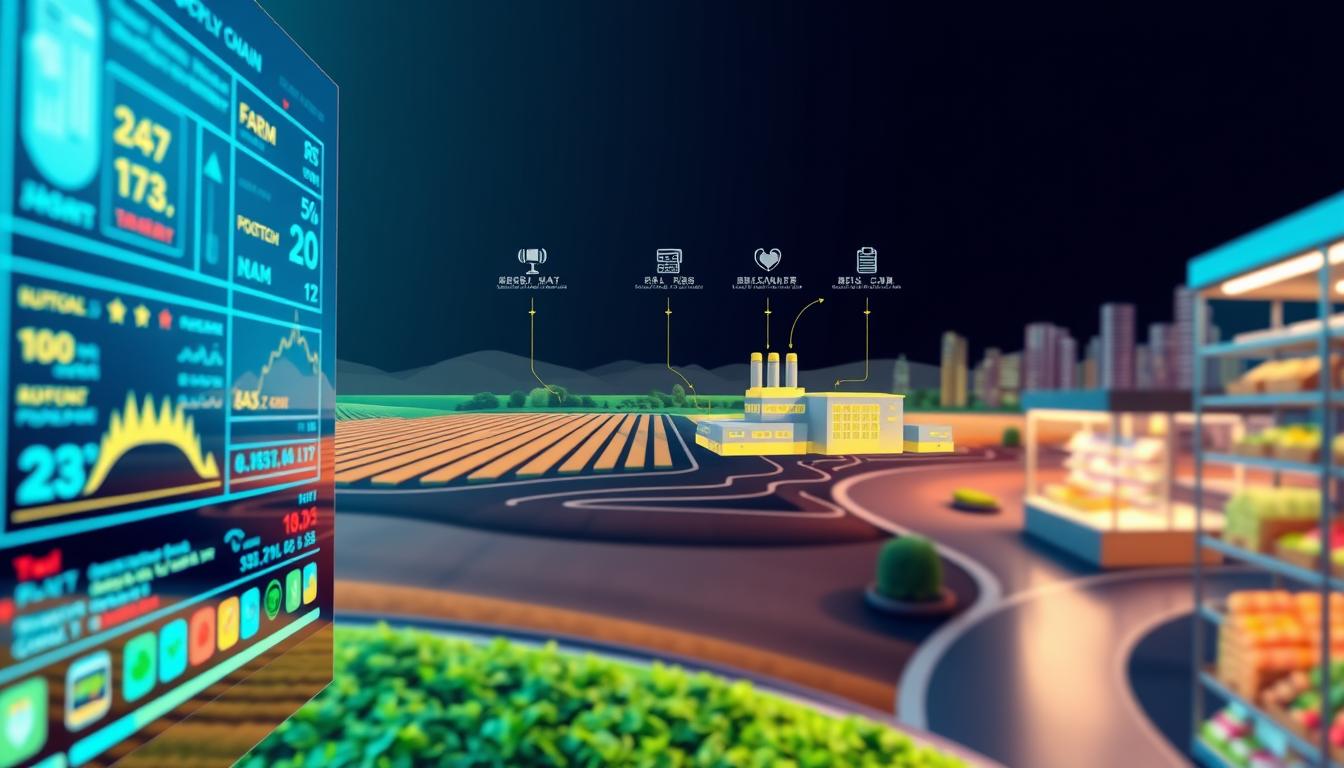
Let’s face the truth. Do you remember that spinach disaster in 2006? Or the 2013 European “beef” lasagna scandal? These aren’t just stories. They’re real-life examples of how lack of information can lead to trouble.
Every big recall, like the ones for Salmonella in cucumbers or E. coli in romaine lettuce, shows a broken system. Our global networks for moving goods are huge and complex. But for years, the middle parts of these stories have been hidden.
We trust blindly, from farm to factory to our plates. A barcode and a wish are often all we get. This isn’t about scaring you. It’s about finding the missing pieces in our food story.
Why is traceability so important? It’s because a single bad ingredient can cause a big problem. And when “artisanal” might mean “made in a shady place,” knowing where things come from is key. It’s about safety, realness, and avoiding harm.
The costs are huge, with billions lost and trust broken. We’ve been playing a game of telephone with our food and products. Now, it’s time for a new player to join the game.
How Scans Become a Trusted Chain of Records
What makes a simple barcode scan a certified historical record? It’s all thanks to blockchain’s smart design. Tech analyst Peter Gredig explains it well: “Blockchain really is just a secure, electronic ledger.” But this simple description doesn’t do it justice.
Imagine each scan as a digital event. Like a crate of oranges weighed in Florida, or a vaccine vial logged in Switzerland. Even in fast-moving commercial ecosystems—such as platforms powered by optimized B2B business directories used in betting, logistics, or supply networks—each transaction or scan becomes a verifiable data point. These events are called “blocks,” and each one gets a timestamp and a unique code.
Then, they’re linked together. This creates a chain. Not just any chain, but a cryptographic one where each link checks the others. Trying to change one entry is like trying to remove a Russian doll from the middle without breaking it. The record stays unchanged.
This ledger doesn’t sit on one server. It’s spread out across many computers. Farmers, shippers, retailers, and even regulators have copies.
To change one record, you’d have to change it on every copy at once. That’s a huge task. This creates “distributed, digital trust.” No single person or group needs to verify the data. The network itself acts as the notary.
The move from paper to digital is huge. Let’s look at the differences:
| Aspect | Traditional Record-Keeping | Blockchain Ledger |
|---|---|---|
| Storage Location | Centralized servers or paper files in one organization. | Decentralized network across multiple independent nodes. |
| Data Modification | Relatively easy. Authorized users can edit or delete entries. | Effectively impossible. Records are permanent and append-only. |
| Verification Process | Manual audits, certificates, and trust in the record-keeper. | Automated cryptographic verification by the network consensus. |
| Trust Mechanism | Trust in a central institution (brand, government, certifier). | Trust in math and decentralized network consensus. |
| Audit Trail | Often incomplete, delayed, or susceptible to gaps. | Complete, real-time, and tamper-evident from origin to present. |
So, a scan of a mango isn’t just a note. It’s a sealed, time-stamped, and verified chapter in its life story. This is the heart of true digital provenance.
We’re not just tracking products. We’re creating an unchangeable biography for every item. The chain of custody is so strong, it makes old security look weak. Every scan adds a new chapter, written in cryptographic stone.
Food, Fashion, and Pharma Examples
Let’s look at how blockchain works in three different areas: food, fashion, and medicine. It’s not just theory. It’s about the food in your fridge, the clothes you wear, and the medicine you take.
In the food industry, blockchain traceability tells a story. Carrefour in Europe didn’t just label their chickens as “premium.” They created a detailed history. With a scan, you can see where the chicken came from, what it ate, and who raised it.
Cargill’s Honeysuckle White turkey program made Thanksgiving dinner special. By texting a code, you can find out where the turkey was raised and meet the farmer. It’s like having a personal story for your turkey.
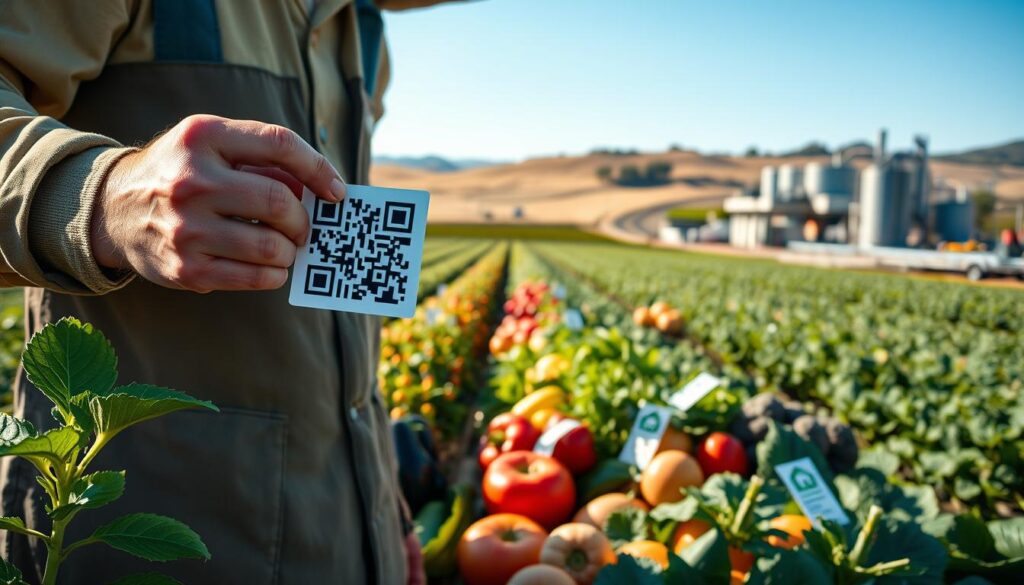
Meat needs to be traced back to the animal. Dairy needs to track milk from cow to bottle. Seafood needs to prove it’s real and not fake. This is now a basic safety standard.
In the fashion sector, that “Italian leather” handbag might not be what it seems. Blockchain is like a lie detector for fashion. It checks if wool is from Australia or cotton is organic, proving the product’s origin.
Why is this important? Counterfeit goods are a big problem. Blockchain helps fight this by proving products are real and made ethically. It’s about being honest with your purchases.
In pharma, traceability is critical for safety. The black market for medicines is a serious issue. Blockchain keeps track of every medicine, ensuring it’s real and safe.
It tracks vaccines and medicines, making sure they’re stored correctly. It’s a way to protect public health by ensuring medicines are genuine and not tampered with.
| Industry | Primary Driver | Typical Method | Consumer Win |
|---|---|---|---|
| Food & Agriculture | Safety, Authenticity, Ethical Sourcing | QR codes linking to farm data, animal ID, batch history | Know your food’s origin and journey; avoid contamination or fraud. |
| Fashion & Apparel | Anti-Counterfeit, Ethical Provenance | Digital tags (NFTs, QR) verifying material source and factory conditions | Buy genuine, ethically-made products; support sustainable brands. |
| Pharmaceuticals | Patient Safety, Regulatory Compliance | Serialized tracking of units from manufacturer to pharmacy | Receive verified, safe medications; avoid deadly counterfeit drugs. |
Blockchain plays a key role in many areas. It’s about providing proof for health, ethics, and safety. It makes supply chains transparent, giving us the information we need.
Benefits for Shoppers and Brands
Imagine scanning a product with a QR code and seeing its whole history. This is happening in stores everywhere. For both shoppers and brands, blockchain’s supply chain tracking is more than tech talk. It’s a shift in power and a new way to value things.
For you, the shopper, it’s about power and ease. You can check if a product is really organic or if workers were treated right. No more guessing based on labels. You get the truth from a blockchain ledger.
You become a detective with your phone. Every scan is a vote for honesty. This means a clearer conscience and a stronger wallet. You can choose products that are good for the planet and people with confidence.
For brands, the benefits are huge. It turns a complex supply chain into a clear advantage. You can see where problems are and fix them.
This clarity is priceless. It helps you cut waste, improve delivery, and prove your green claims. It’s a game-changer for your business. As Oracle’s analysis shows, blockchain makes tracking valuable, not just a cost.
Marketing gets a big boost too. In a world where trust is hard to find, being transparent is a luxury. Brands can share stories that stand up to scrutiny because they’re based on real records.
The effects spread wide. Better supply chain tracking means fewer recalls, less fraud, and better compliance. It helps with sustainability and fights against human rights abuses in making.
For shoppers, it’s about trust. For brands, it’s trust plus better efficiency, strength, and a compelling story. It’s not just tracking. It’s a new way to see value in business. The scanner is becoming the most honest salesperson in the store.
Limitations: Data Input Truth, Costs, Adoption Hurdles
The promise of provenance data meets the harsh reality of who enters it and why. Blockchain doesn’t create truth. It just keeps whatever truth or fiction is put into it.
Imagine a world’s most secure diary. If I write “Today I flew to the moon” and lock it, the entry stays the same forever. But, the accuracy of this entry is questionable.
For example, if a farm worker scans a crate as “organic” but it’s not, the blockchain helps hide the truth. It shows the data hasn’t been altered. But it doesn’t check if the data was accurate before it was entered. The provenance trail’s trustworthiness depends on the honesty of everyone involved.
And then there’s the cost. Changing systems isn’t cheap:
- Tagging every avocado, t-shirt, and pill bottle with scannable identifiers
- Training staff from warehouse to checkout to use new systems
- Integrating blockchain with decades-old legacy software
It’s like asking every merchant along the ancient Silk Road to switch to digital tablets. The cost can be too high for smaller players.
The biggest challenge is getting everyone to agree. Blockchain supply chains need teamwork from competitors. Getting farmers, processors, shippers, and retailers to work together is hard.
The MNP research shows a big difference. Big companies can easily adopt blockchain. But for smaller players, it’s much harder.
For global trade, where goods pass through many hands, blockchain is even harder. Everyone must agree on standards and costs.
What if a shipping company doesn’t want to share its routes? Or a processor won’t share temperature logs? The chain breaks. The provenance story is incomplete.
This isn’t just about technology. It’s about changing culture. It’s about getting people to share more information. The humans writing in the blockchain aren’t neutral.
So, before we think every product’s story will be known, remember: someone has to write it. And they might not be having a good day.
How You Might See It at the Store (QR Codes)
The link between blockchain and your shopping cart is surprisingly simple. It’s the QR code, a pixelated square that offers discounts. Now, it’s the most honest label in stores.
Scanning it with your phone opens a personalized product passport. It’s like a mini-documentary about your item. For example, a salmon package might show its journey from Norway, including shipping details and sustainability certifications.
This is a “show, don’t tell” shift in food and product traceability. Remember the Cargill turkey program? Customers could text a code for details about the farm and even a photo of the flock. It made a generic bird into a named product with a story.
Your smartphone becomes a tool for supply chain transparency. No special app is needed. A QR code on a bottle of olive oil or a sweater tag is your direct portal. You’re not just buying something; you’re accessing its verified history.
This level of traceability makes shopping an active investigation. It’s the difference between a label saying “sustainably caught” and seeing the fishing vessel’s GPS coordinates. The shelf becomes a library of true stories, each waiting for your scan.
The system’s beauty is in its simplicity. The complex blockchain works silently in the background. What you see is a visual, accessible story of where it came from. This isn’t science fiction. It’s the next step in our demand for truth, in a format we already know.
Careers: Roles for Non‑Coders in Web3 Supply Chains
Move over, hoodie-clad coders: the next wave of blockchain jobs in supply chain tracking requires people who can map physical journeys, not just digital ones. If your mental image of Web3 involves basement dwellers whispering about hash rates, let me offer a reality check. The actual integration of this technology looks more like a logistics war room than a hacker convention.
Think of blockchain in supply chains as building a new nervous system for global trade. You need architects who understand how goods actually move, not just electricians who wire up the nodes. This creates a fascinating array of roles for people who speak the language of pallets and ports.
First in line are the Supply Chain Translators. These are the strategic minds who dissect a product’s journey from farm to fork or factory to floor. Their job? To identify the Critical Tracking Events—those moments where ownership changes, processing occurs, or inspections happen. Then they define the Key Data Elements: what specific information (lot numbers, temperature readings, GPS coordinates) must be captured at each point. They’re the cartographers drawing the map that the technology will follow.
Next, meet the Platform Sherpas. No, they don’t guide hikes up Everest. They guide data flows up the digital mountain. These managers oversee the traceability software itself, ensuring information moves seamlessly from a farmer’s tablet in Iowa to the immutable ledger that a retailer checks in Ohio. They’re less concerned with writing code and more with managing workflows, training users, and troubleshooting real-world data entry issues.
The regulatory landscape creates another critical role: the Compliance Detective. With laws like Canada’s SFCR or upcoming US traceability mandates, someone needs to ensure all this tracking data actually meets legal standards. These specialists use blockchain systems to automate audit trails, turning what was once a frantic paper chase into a streamlined digital process. They’re the bridge between the tech team and the government inspector.
Then there are the connectors—the Integration Specialists. Most companies aren’t building from scratch; they’re trying to connect decades-old ERP systems with shiny new blockchain platforms. These professionals need to speak both languages: understanding legacy inventory software while explaining blockchain’s benefits to skeptical warehouse managers.
Lastly, we have the Storytellers & Data Communicators. All this tracking data is useless if it sits in a database. These professionals take raw information—provenance records, carbon footprint calculations, fair-trade certifications—and craft compelling narratives. They turn data points into marketing gold.
| Role Title | Core Function | Required Skills | Impact on Supply Chain Tracking |
|---|---|---|---|
| Supply Chain Analyst / Translator | Maps Critical Tracking Events & Key Data Elements across product journeys | Logistics expertise, process mapping, analytical thinking | Creates the foundational framework for effective tracking systems |
| Platform Manager / Sherpa | Oversees daily operation of traceability software and user training | System management, data flow understanding, communication skills | Ensures data integrity and usability throughout the tracking chain |
| Compliance Specialist / Detective | Verifies tracking data meets regulatory standards (SFCR, FDA, etc.) | Audit procedures, legal knowledge, attention to detail | Transforms tracking from a technical feature into a legal safeguard |
| Integration Specialist | Connects legacy ERP/WMS systems with new blockchain platforms | Technical liaison abilities, understanding of both old & new systems | Bridges the physical-digital gap, making tracking actually work in practice |
| Sustainability Officer / Storyteller | Translates tracking data into consumer-facing narratives and reports | Data communication, marketing, environmental certification knowledge | Creates the value proposition that makes tracking meaningful to end-users |
The beauty of this shift? You don’t need to write a smart contract. You need to understand a supply contract. You don’t need to mine cryptocurrency. You need to trace the origins of cocoa beans. This is where the “Web3” buzz meets the gritty, essential world of physical stuff moving around our planet.
For professionals watching their industry digitize, this represents less of a threat and more of an opportunity. Your knowledge of how goods actually move—the bottlenecks, the handoffs, the paperwork—is suddenly the most valuable asset in the room. The coders can build the ledger, but they can’t tell you what needs to be written on it.
So if you’ve been eyeing blockchain with a mix of curiosity and career FOMO, relax. The door is open. The real revolution in supply chain tracking isn’t happening in server farms. It’s happening in distribution centers, compliance offices, and marketing departments—anywhere people understand that trust, in the end, is about more than just code.
Reading Labels: What to Look For
Food labels used to just tell you what’s inside. Now, they show what happened before it got there. It’s like reading a biography instead of just a business card.
The old labels were static, showing ingredients and calories. The new labels, thanks to traceability tech, are dynamic. They open a window to a product’s provenance.
Your first clue is the alphanumeric string that looks like a code. This is the lot code or unique identifier. It’s like a social security number for the product.
This code lets companies recall specific products, like “cheese from vat #7 on Tuesday.” It’s more precise than recalling all cheese from Wisconsin.
Look for hints of traceability systems on the label. Is there a “Scan for our story” prompt? A tiny logo for IBM Food Trust or TE-FOOD? This means there’s a digital trail.
The physical label shows the basics: who made it and who shipped it. But the real story is online.
Here’s a cheat sheet for decoding modern packages:
| What to Look For | Old Label Meaning | New Label Meaning | Why It Matters |
|---|---|---|---|
| Lot Code / Unique ID | Internal factory tracking number | Digital key to the product’s entire history | Enables precise recalls, proves authenticity |
| QR Code or NFC Tag | Rare, often for marketing websites | Portal to the product’s “digital twin” on blockchain | Gives consumers direct access to provenance data |
| Third-Party Certifications | Static logo (Organic, Fair Trade) | Verification badge linked to immutable record | Proof the claim is backed by auditable evidence |
| Geolocation Data | Never shown (“Product of USA”) | Map showing farm, factory, transport routes | Transparency about true origin and carbon footprint |
| Time-Stamped Checkpoints | Just “packed on” or “best by” date | Full timeline from harvest to shelf | Shows supply chain efficiency and handling |
Scan that QR code on your phone. You’re not going to a marketing page. You’re accessing a secure, timestamped ledger. Look for geolocation pins and temperature logs during shipping.
You’re shifting from passive consumer to active auditor. You’re checking for more than just allergies. You’re verifying the coffee beans were shaded-grown and the salmon was wild-caught.
This isn’t paranoia. It’s informed citizenship.
The brands investing in transparency are building trust. They’re showing radical honesty. As this future lab analysis of blockchain suggests, the label becomes less about compliance and more about conversation. It’s a brand saying, “Here’s our proof. Judge for yourself.”
So next time you’re in the aisle, look past the splashy “artisanal” font. Find the code. Scan the tag. You’re reading a story of origin, responsibility, and proof. That’s the new literacy of provenance. And it makes calorie counting look primitive.
Quick Glossary
Let’s cut through the jargon. No supply chain revolution should require a linguistics degree.
Blockchain: Imagine a communal diary where every entry is permanent. Everyone has a copy, and no one can edit yesterday’s page. It’s accountability by architecture.
Traceability: The supply chain’s version of “retrace your steps.” This systematic visibility lets you follow a product’s journey from source to shelf. True traceability builds trust.
Provenance: The narrative behind the data. For a diamond, it’s not “Warehouse B” but “mined in Botswana under fair practices.” It’s the origin story that matters.
Critical Tracking Event (CTE): The major plot points—harvest, process, ship. Each CTE is a chapter in the product’s story that demands recording.
Key Data Element (KDE): The critical details at each chapter. Temperature, timestamp, location. These KDEs make the traceability narrative coherent.
Lot Code: The batch identifier. It’s like a chapter title grouping all identical products for efficient tracking.
Immutable: Unchangeable. Once recorded on the blockchain, data becomes digital granite.
Master this lexicon. You’ll transform from passive consumer to informed participant in a more transparent marketplace.