
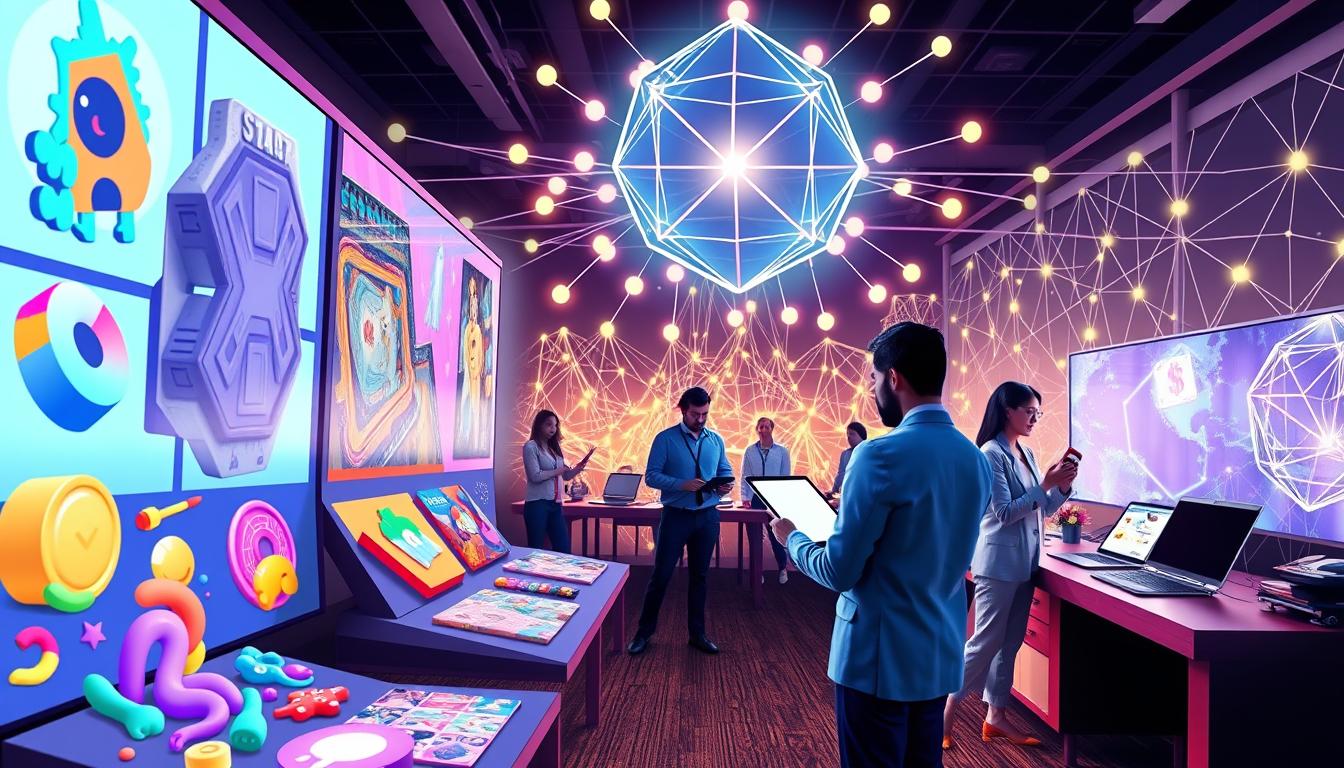
Let’s cut through the noise of crypto enthusiasts and big-dollar JPEG headlines. What’s this digital asset class that’s got Jay-Z and your favorite Instagram artist excited?
A non-fungible token is a digital certificate of authenticity. It says a digital asset is unique, like the original Rothko, but for the internet.
These tokens use blockchains like Ethereum. They change how we own things in a world of copies. The 2021 hype, like Beeple’s $69 million sale at Christie’s, was just the start.
NFTs aren’t just a short-lived craze for bored apes and pixel art. They’re part of a larger digital transformation, including innovations like next-gen media streaming solutions, which explore how content ownership, distribution, and monetization can be reimagined through blockchain. For newcomers, understanding NFTs today is a gateway to the broader ecosystem of digital ownership and creative technology.
What Makes an NFT Valuable (Scarcity, Utility, Community)
The value of an NFT isn’t just in its code. It’s a mix of three key things: scarcity, utility, and community. Forget the big headlines for a moment. The real question is what makes a digital collectible special, not just a pretty picture.
Scarcity is the first ingredient. “Non-fungible” means it’s unique. But not all rare things are the same. Is your NFT as rare as a diamond, or just a participation trophy?
True scarcity comes from being limited, having historical value, or being signed by a famous artist. Artificial scarcity, like 10,000 similar apes, needs the next two factors to be valuable.
Utility asks if your NFT does anything useful. This is where NFTs go beyond art. It could be a ticket to an event, virtual land, a software license, or a game character skin. The more useful it is, the more value it has, beyond just speculation.
Then there’s Community. This is the wild card. It’s the love and loyalty for projects like Bored Ape Yacht Club. Value here comes from being part of a group. It’s like being in a club, where being with others is what matters most.
| Value Driver | What It Means | The Risk |
|---|---|---|
| Scarcity | Digital proof of a unique, non-copyable asset. | Artificial oversupply can make “rare” items common. |
| Utility | The real-world or virtual function the NFT provides. | Promised features (“roadmap”) may never materialize. |
| Community | The social status and network access ownership grants. | Hype is fickle; communities can dissolve overnight. |
Just being new isn’t enough. A cool-looking JPEG without scarcity, utility, or community is just a file. The best digital collectibles mix at least two of these elements. For example, a gaming item with scarcity and a community.
When looking at an NFT, ask if its scarcity is real. Does it have utility? And is its community something you’d want to join? The answers will tell you if it’s a classic or just a flash in the pan.
Popular Uses: Art, Music, Gaming Items, Event Access
Forget dusty auction houses and crowded ticket queues. The real NFT revolution is happening in digital spaces. It’s not just speculation; it’s a real shift. Understanding this is your first lesson in NFT safety.
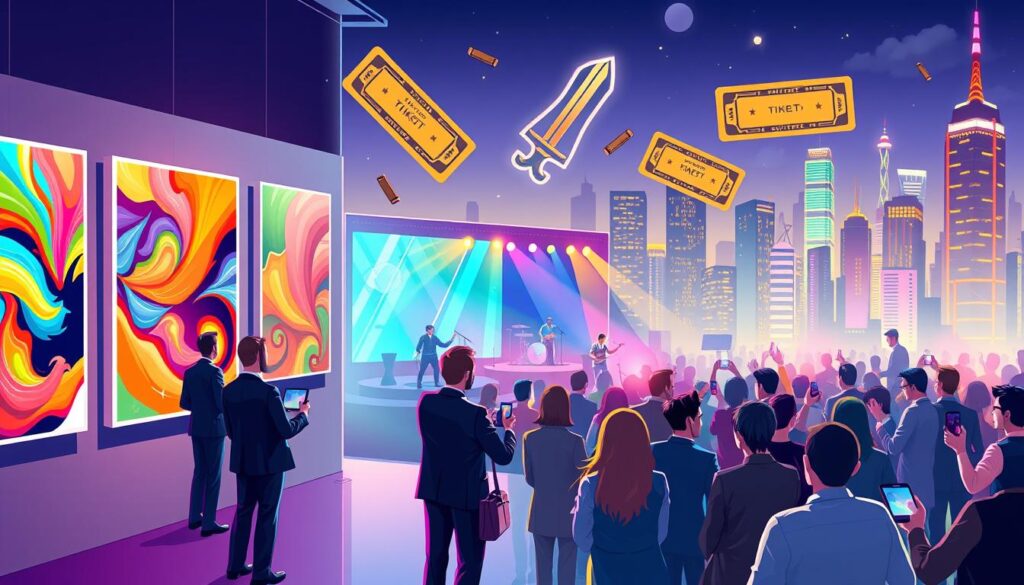
When people hear “NFT,” they often think of cartoon apes or pixelated punks. But there’s more. NFTs are changing the game for creators and consumers. They’re taking over the creative and experiential economy.
The major use cases fall into a few powerful categories:
- Digital Art & Collectibles: This is the main event. Artists like Beeple and Fewocious sell digital masterpieces with NFTs. It’s not just a JPEG; it’s a proof of ownership on a public ledger. Projects like Bored Ape Yacht Club turn art into a social membership card.
- Music & Royalties: NFTs get really interesting here. Musicians like 3LAU sell tokens for album ownership or future royalties. Fans become stakeholders. It’s a direct connection from artist to supporter, bypassing traditional industry middlemen.
- Gaming Items & Assets: Here, utility is key. Remember CryptoKitties? They were digital pets you could own, breed, and sell. Today, it’s unique swords, character skins (like Meebits), or virtual fashion. You own the asset across games and platforms. It’s your property, not just a rental.
- Event Access & Real-World Utility: An NFT can be an unforgeable ticket. Imagine a concert pass that also acts as a collectible poster or grants backstage access forever. It kills fraud and creates a lasting memento. This extends to exclusive club memberships, subscription services, and real-world product unlocks.
The buzzword is the Metaverse. It’s not “Ready Player One,” but a mix of virtual worlds. In these spaces, your avatar’s RTFKT sneakers or virtual land are NFTs. They’re the foundation of digital identity and economy.
Why does this matter for a beginner? When you see an NFT, ask: What does it actually do? Is it beautiful art? Does it provide access? Does it have utility in a game or community? A practical use case is safer than speculation. Spotting the difference is key to smart participation.
Knowing what’s possible—from owning a song’s future to a unique game item—helps you spot what’s preposterous. This discernment is the foundation of smart collecting.
What Are Non-Fungible Tokens (NFTs)?
Non-fungible tokens, or NFTs, are unique digital assets that can be bought, sold, and traded. They are created using blockchain technology, which ensures their authenticity and scarcity. Unlike fungible tokens, which are interchangeable, NFTs have distinct characteristics that make them one-of-a-kind.
One of the key features of NFTs is their ability to represent ownership of digital items. Whether it’s a piece of art, a collectible, or even a virtual real estate, NFTs provide a secure and transparent way to prove ownership and transfer value.
Blockchain technology plays a vital role in the creation and management of NFTs. It allows for the creation of unique digital assets and ensures their integrity and scarcity. By utilizing blockchain, NFTs can be securely stored, transferred, and verified, providing a reliable platform for digital ownership.
With the rise of NFTs, new opportunities have emerged in various industries. From art and collectibles to gaming and virtual real estate, NFTs have opened up new avenues for creators and investors alike. They have democratized the concept of ownership and have the power to revolutionize the way we perceive and interact with digital assets.
As the NFT market continues to grow, it is important to stay informed about the latest trends, technologies, and applications. By understanding the fundamentals of NFTs and their role in the digital economy, you can navigate this exciting space and explore the vast possibilities it offers.
Benefits of NFTs
There are several benefits to NFTs that make them an attractive option for creators and investors:
- Unique Ownership: NFTs provide a secure and transparent way to prove ownership of digital assets.
- Scarcity: The scarcity of NFTs adds value and exclusivity to digital items.
- Transparency: Blockchain technology ensures the authenticity and integrity of NFTs.
- Decentralized: NFTs operate on decentralized platforms, allowing for peer-to-peer transactions without intermediaries.
- Investment Opportunities: NFTs have the ability to appreciate in value over time, making them a viable investment option.
By embracing NFTs, creators can monetize their digital creations and connect directly with their audience. Investors can explore new opportunities and diversify their portfolios. The future of NFTs holds immense promise, and staying informed about the latest developments is essential for anyone looking to capitalize on this exciting trend.
Red Flags: Scams, Phishing, Fake Collections
Scammers in the NFT world are as creative as artists but as dishonest as pickpockets. The rush for digital gold has brought both real innovators and scammers. Your excitement about digital collectibles might make you overlook warning signs.
Phishing attacks are like digital pickpocketing. They’re not simple email scams. Instead, they’re sophisticated tricks on Discord, fake links on Twitter, and fake minting sites. One wrong click can empty your crypto wallet fast.
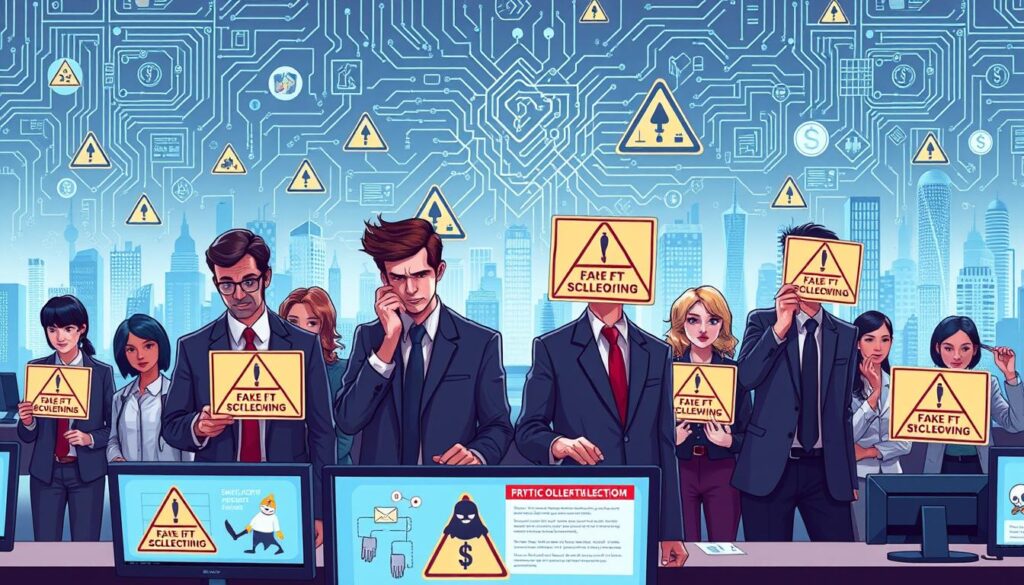
Fake art is common too. That “Bored Ape” might be a scammer’s fake version. Scammers copy real projects to trick you. Always check official links through different sources, not just ads.
Pump-and-dump schemes are also common. A group makes a worthless collection seem valuable, then sells it all. This leaves newcomers with worthless items. It’s not just market ups and downs—it’s theft.
Rug pulls are another scam. You invest in a project, then the developers vanish with all the money. The website and social media accounts disappear. Always research the team behind a project. If they’re anonymous, it’s a red flag.
Discord servers can tell you a lot. A suspicious server has more moderators than members. Legit communities talk about the project’s future and art. Scam communities just talk about making money.
Here’s what you need to check:
- Verify everything twice: Official website links, Twitter verification, and contract addresses
- Research the team: LinkedIn profiles, past projects, and public engagement
- Analyze the community: Genuine enthusiasm versus paid shilling
- Check transaction history: Who’s really buying and selling these assets?
- Trust your gut: If something feels too good to be true, it probably is
The market for digital collectibles is risky. It’s filled with scams. Legit projects welcome questions, while scams avoid them.
Volatility comes from both market forces and scammers. Your research protects you. Don’t let FOMO stop you from verifying things. The line between art and fraud is thin.
Protecting yourself in the digital collectibles world needs both excitement and caution. The most valuable thing is your ability to spot scams before they spot you.
Real Examples of Useful NFTs (Tickets, Memberships)
NFTs are more than just digital art. They can solve real problems. Let’s look at NFTs that actually do something useful.
True NFT safety means using tokens that have real value. It’s like the difference between a Swiss Army knife and a decorative sword. One is useful, the other is not.
NBA Top Shot is a great example. It’s not just digital basketball highlights. Owners get special access to events and virtual meetups. It’s like a sports card with extra perks.
The Bored Ape Yacht Club is another example. It’s not just about the artwork. It’s a membership card that gives access to exclusive events and merchandise. You’re buying into a community.
This shows something important about NFT safety. NFTs with ongoing utility are more stable. The community helps keep them safe from speculation.
Now, let’s talk about tickets. Traditional tickets are fragile and can be lost or forged. NFT tickets change this.
Imagine a concert ticket on the blockchain. It can’t be copied. The artist gets royalties if it’s resold. After the concert, it becomes a collectible with provenance.
Some festivals already use NFT tickets. They grant:
- Entry to the event
- Exclusive digital content during the show
- Access to an after-party
- A permanent record of your attendance
The ticket becomes part of your digital history. This is NFT safety in action: creating systems that are transparent, secure, and add value.
But let’s get even more practical. Some projects use NFTs as software licenses. Instead of a traditional license, you get an NFT.
Need to sell it? The marketplace exists. The original developer gets a royalty. The license’s history is transparent. Everyone wins.
The same concept applies to physical assets. An NFT could represent ownership of a rare bottle of wine, a piece of art, or even real estate. The blockchain becomes the unforgeable deed. The physical item has a digital twin with immutable provenance.
Consider these real-world applications:
| NFT Type | Traditional Equivalent | NFT Advantage |
|---|---|---|
| Event Ticket | Paper or digital ticket | Anti-scalping, collectible, royalty stream |
| Membership Pass | Plastic card or login | Unforgeable, tradable, community access |
| Software License | Serial number or account | Resalable, transparent history, creator royalties |
| Asset Deed | Paper certificate | Immutable provenance, easily transferable |
These examples share a common thread: they’re solving real problems. They’re not creating artificial scarcity for its own sake. They’re using blockchain technology to improve existing systems.
This brings us back to NFT safety. When evaluating an NFT project, ask: “What does this actually do?” Does it grant access? Does it solve a logistical problem? Does it create a fairer system?
If the answer is “it looks cool,” you’re in speculative territory. If the answer involves utility, access, or solving real-world issues, you’re looking at a different kind of asset. One with built-in defenses against being just another bubble.
The most secure NFTs aren’t necessarily the most expensive ones. They’re the ones with clear, ongoing utility. They’re the tickets that get you into the show, the memberships that open doors, the licenses that actually work.
In a space often dominated by hype, these practical applications offer something refreshing: actual usefulness. And that might be the safest investment of all.
Costs, Risks, and Environmental Notes
Before jumping into the NFT world, be aware of its challenges. The surface of digital ownership looks shiny but hides deep issues. Let’s explore the harsh truths of investing in non-fungible tokens.
The cost is just the start. Remember those gas fees? They can make your purchase much pricier during busy times. It’s like buying a concert ticket and then finding out the “convenience fee” is more than the ticket itself.
The financial ups and downs don’t end there. An NFT’s value can drop quickly, like a celebrity’s tweet losing popularity fast. This makes traditional crypto seem safer by comparison.
Then, there’s “link rot.” It’s like buying a beautiful frame, only to find the painting inside has faded. Your expensive JPEG might link to a URL that disappears tomorrow. The blockchain records ownership, but not permanent access to the asset.
Cultural trends change fast. What’s popular today might be forgotten tomorrow. Investing in non-fungible tokens means understanding that digital trends shift quickly. Your prized digital sneakers might be cool next year or just old.
| Consideration | What It Means | Real-World Example | Mitigation Strategy |
|---|---|---|---|
| Upfront & Hidden Costs | Purchase price + gas fees + marketplace commissions | Buying a $100 NFT with $80 gas fees during network congestion | Time purchases for low-traffic periods; factor in ALL costs |
| Market Volatility | Extreme price swings based on hype, trends, and celebrity endorsements | An NFT selling for $500K one month, $50K the next | Invest only what you can lose; diversify; avoid FOMO purchases |
| Technical Risks | Link rot, platform failure, wallet security issues | Your NFT metadata pointing to a defunct server | Research project longevity; use reputable wallets; understand storage |
| Environmental Impact | Energy consumption of proof-of-work blockchains | Ethereum’s pre-merge energy use comparable to small countries | Choose proof-of-stake chains; support eco-conscious projects |
| Cultural Obsolescence | Digital assets losing relevance as trends change | 2017 CryptoKitties vs. 2021 Bored Apes vs. today’s trends | Focus on utility over hype; invest in communities, not just art |
The environmental impact is a big concern. The original proof-of-work system used by Ethereum consumed a lot of energy. Each transaction had a big carbon footprint, like skipping the gym and feeling guilty.
But there’s a positive change. Ethereum’s move to proof-of-stake (the “Merge”) greatly reduced its energy use. It’s like switching from a gas-guzzling car to an electric bike that goes just as fast. Other chains like Solana and Tezos were built to be green from the start.
Yet, the past impact remains. Some blockchains are not yet green. Your investment choices have an ethical impact. Do you support energy-intensive systems or choose greener options? It’s like choosing between plastic and reusable bags.
So, what’s the takeaway? Invest with your eyes open. Understand that non-fungible tokens are a new market with new risks. The costs are complex, the market is volatile, and your choices have big impacts.
An informed investor is not just wealthy but also responsible. Weigh these factors carefully. The digital future belongs to those who see beyond the surface to the real value beneath.
Step‑by‑Step: Safe First Purchase Checklist
Buying your first NFT is like defusing a bomb. One wrong move and your digital dreams can explode. You need to stay calm and follow a checklist to avoid trouble.
Don’t treat buying NFTs like a casino game. Your first time should be about careful research, not quick bets.
Follow these steps carefully. Missing one can lead to big mistakes.
- Deep-Dive Research (The “Who” Check)
Who made this NFT? Look for a real artist or a fake account. Check their Discord for activity. Is it a lively community or a deserted place?
Look at past sales. Are prices steady? Is there real trading, or just self-deals?
- Verification Autopsy (The “Real” Check)
Fake NFTs are common. Always check the official contract address. Never trust links from random Discord messages.
Make sure the artwork and attributes match the official collection. This is basic but often skipped.
- Utility & Roadmap Assessment (The “Why” Check)
What does this NFT do? Is it just for looks, or does it offer real benefits? The best ones have practical uses.
Read the project’s roadmap. Is it clear and detailed, or vague? A good roadmap shows a team that’s serious about their project.
- Wallet Security Lockdown (The “Fort Knox” Check)
Before connecting your wallet, make sure it’s secure. Use a strong password and two-factor authentication. Keep your seed phrase safe and never share it.
For big purchases, consider a hardware wallet. It’s like keeping your money in a bank vault.
- The Small Start Principle (The “Dip Your Toe” Check)
Start small, not with a huge investment. This way, you can learn without losing too much money.
See it as learning, not just buying. The experience is more valuable than any quick profit.
This checklist might seem long. But in the NFT world, it’s your only guide. For more info, check our NFT beginner guide.
Buying NFTs should be done with care and knowledge. Now you can buy without worrying. The market rewards careful buyers and punishes the reckless. Choose wisely.
Storing and Reselling Basics
You’ve got your first digital asset. Now, what do you do? Your NFT is in your crypto wallet. But here’s the catch: you’re not storing the Mona Lisa. You’re holding a deed that points to where it is online.
Imagine owning a house title, but the house is on someone else’s server. If that server goes down, your deed is useless. This is where NFT safety gets really deep.
Good projects use decentralized storage like IPFS. It’s like keeping your valuables in a bank vault, not your cousin’s garage. Always check where the artwork data is stored for NFT safety.
Want to flip digital assets? OpenSea makes it easy. Just set your price, pay the gas, and wait for bids. The process is simple once you get the hang of it.
But remember, your NFT’s value changes fast. Market moods shift quickly. That pixelated punk could be today’s gem and tomorrow’s trash.
True NFT safety is from buying to selling. It’s about knowing about custody, commerce, and digital value’s fragility. Your wallet is safe. But understanding value is the real investment.