
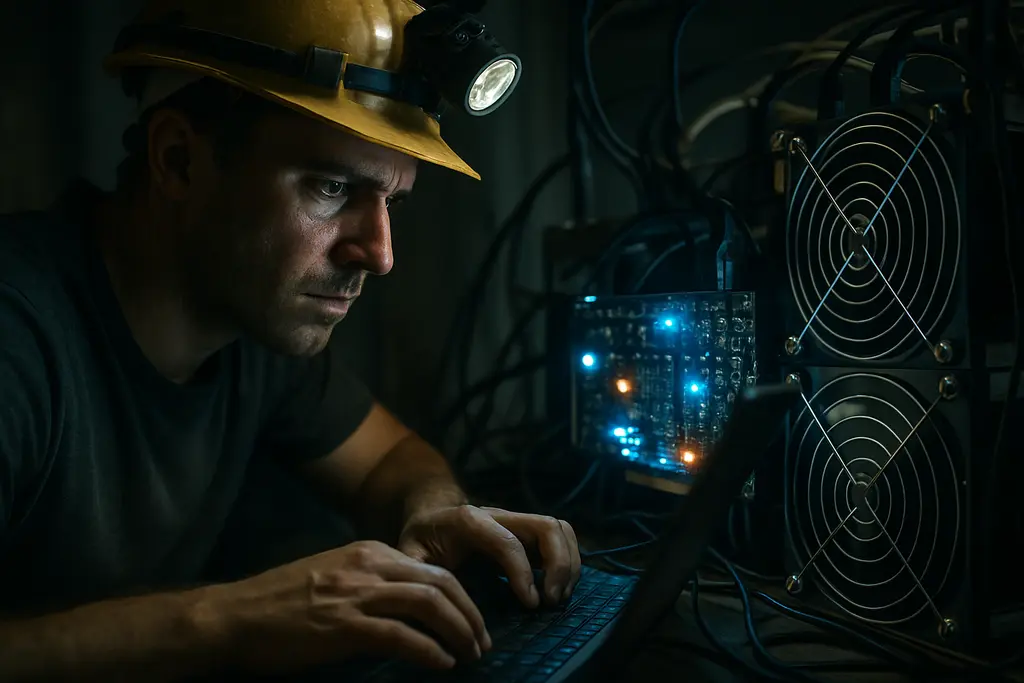
Cryptocurrency mining energy demand is no longer a side issue for grid planners. After the UNECE’s September 2026 report on data centres and large electrical loads, the subject is better framed as a system-planning problem: how much power is used, where it is used, whether demand can be reduced at tight grid periods, and how reliable the underlying measurements are.
The evidence supports caution rather than alarm. Mining can be a material load, especially where operations cluster near low-cost power. Yet the impact is not uniform across regions, and headline global figures do not show whether a site is drawing from constrained fossil-heavy capacity, surplus renewable output, nuclear generation, or a mix that changes by hour. That distinction matters for emissions, grid resilience, and public policy.
Cryptocurrency Mining Energy After The UNECE Report
Cryptocurrency Mining Energy Demand In The Data-Centre Context
The UNECE report placed mining beside data centres and other large electrical loads because the planning problem is similar: high-density demand can arrive faster than transmission, interconnection, and reserve planning can adapt. UNECE stated that cryptocurrency mining adds about 100–130 TWh of annual electricity demand globally, while global data centre electricity use is projected to rise from about 485 TWh in 2025 to about 950 TWh by 2030; it also said data centres plus large electric loads such as crypto mining could reach 3% of global electricity demand by 2030, according to the UNECE press release.
Those figures should be read as planning signals, not as a single verdict on every mining site. A 10 MW facility connected to a constrained local grid can create a different reliability issue than a larger load participating in curtailment programs in a region with surplus generation at certain hours. The technical question is less about whether the load is digital or industrial, and more about load shape, connection point, ramping behavior, contract terms, and the carbon intensity of power used.
What The Report Changed
The September 2026 framing shifted attention from annual consumption alone to resilience. Annual TWh estimates are useful, but they can hide peak-hour effects. Grid stress is often a timing problem: demand is hardest to serve during heat waves, cold snaps, outages, fuel constraints, or transmission bottlenecks. Mining equipment is electrically flexible in principle because machines can be powered down faster than many industrial processes. That flexibility only helps if contracts, controls, and operator incentives support curtailment during grid stress.
For readers interested in connections between different areas of study, a similar platform offers insights on various topics, as seen at Stamps in Class. Here, the narrower lesson is that energy claims about digital systems need traceable measurements rather than slogans.
Grid Resilience And Measurement Limits
Why Estimates Vary
The U.S. Energy Information Administration has highlighted the difficulty of tracking mining load because operators can move, expand, pause, or change equipment. The EIA reported a 2023 Bitcoin electricity-use point estimate of 120 TWh and cited a wide range of 67–240 TWh depending on methodology; for U.S. cryptocurrency mining, it estimated a range equal to roughly 0.6% to 2.3% of U.S. electricity consumption, as described in the EIA estimate.
A wide range is not a weakness to ignore. It is a warning about measurement uncertainty. Mining power use depends on network difficulty, asset efficiency, uptime, coin price incentives, local electricity prices, and cooling needs. Even if the number of machines were known, actual consumption would still depend on utilization and curtailment. For policymakers, that means facility-level reporting and grid operator data may be more useful than broad assumptions based on global hash rate alone.
Location And Timing Matter
Two sites with the same annual consumption can have different effects. One may run during hours when renewable generation would otherwise be curtailed. Another may add demand during local peaks and require network upgrades. The research record also shows that surveyed miners reported 888 GWh of curtailed load in 2023, suggesting that demand response is technically possible. Still, reported curtailment does not prove every mining operator will reduce load when needed, or that curtailment will be available in the right location at the right hour.
For small and midsize firms weighing blockchain exposure, energy reporting is part of vendor due diligence. A related discussion of SME energy reporting checks explains why buyers should ask for data rather than accept broad claims about sustainability.
Hardware Efficiency, Emissions, And Operating Risk
Efficiency Gains Do Not Settle The Issue
Mining hardware has become more efficient, with cited figures moving from about 40–50 joules per terahash in 2020 to around 17.5 J/TH in 2024. That is a meaningful technical improvement. It means a miner can perform more hashing work for the same electricity input. It does not automatically mean total electricity use falls. If more machines are deployed, or if higher efficiency makes marginal operations cheaper to run, aggregate demand can still rise.
This is a common rebound problem in energy analysis. Unit efficiency is necessary, but it is not a full environmental metric. The full assessment needs uptime, generation mix, cooling method, grid congestion, equipment turnover, and end-of-life handling. Proof-of-work systems also create hardware replacement pressure because older machines lose competitiveness as difficulty and efficiency standards change.
Emissions And Resource Use
Published estimates in the research set place proof-of-work mining emissions at roughly 48.6–64.4 million metric tons of CO₂ annually, with electronic waste also identified as a concern. Another estimate for the broader cryptocurrency mining industry in 2023 put electricity consumption at about 119.7 million MWh, emissions at about 90.6 million tons CO₂ equivalent, and water use above 1.85 billion cubic meters. These figures differ in scope, so they should not be mixed without care. Bitcoin-only, proof-of-work-only, U.S.-only, and broader cryptocurrency estimates are not interchangeable.
Energy sourcing claims also need careful reading. The research notes report that more than 52% of surveyed miners used sustainable zero- or low-carbon sources, including 42.6% renewables and 9.8% nuclear, up from 37.6% in 2022. That suggests progress among surveyed firms, but a survey is not the same as a verified global power mix. Contractual renewable claims, hourly matching, local grid emissions, and behind-the-meter generation can produce different carbon results.
Cost Pressure, Security, And Maintenance
Electricity Cost Shapes Behavior
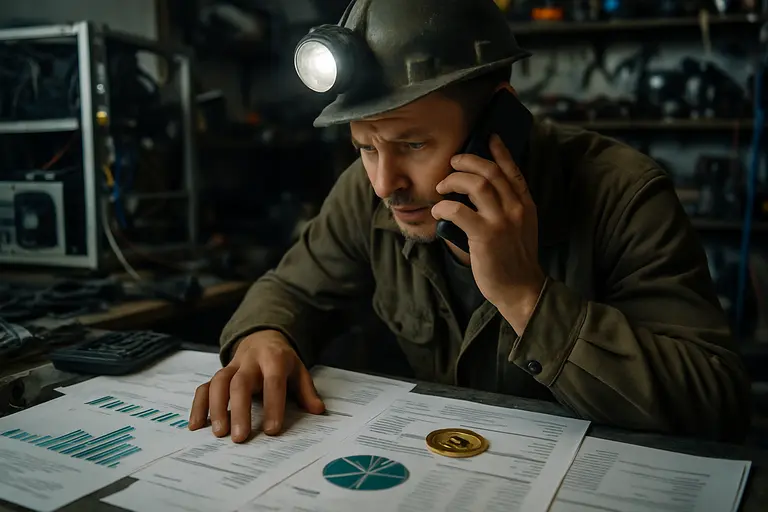
Among listed digital mining firms, electricity costs reportedly make up more than 80% of cash operating expenses, with typical reported electricity prices around $45/MWh for power only and $55.50/MWh for all-in operating costs. This cost structure explains why miners search for cheaper power, participate in curtailment markets, and replace less efficient machines. It also means energy policy changes, interconnection delays, or tariff shifts can quickly alter operating decisions.
This cost sensitivity can help or hurt grids. If miners respond to price signals by shutting down during scarcity, they can reduce stress. If contracts insulate them from local grid conditions, or if incentives reward constant operation, they may worsen peak demand. The policy design question is practical: can tariffs, interconnection rules, and demand-response programs make flexible behavior measurable and enforceable?
Operational Security Links To Energy Use
Mining is not only an energy issue. It is also an infrastructure and security issue. Operators need accurate monitoring of power draw, firmware versions, pool connections, facility access, and cooling systems. Poor maintenance can increase downtime, heat risk, and wasted electricity. Weak access controls can expose operations to tampering, misconfiguration, or unauthorized use of equipment. Defensive controls should focus on asset inventory, patch management, logging, physical access control, and verified configuration changes.
For public agencies and utilities, the affected groups include residential customers exposed to local rate impacts, industrial customers competing for interconnection capacity, and grid operators responsible for reliability. For miners, the affected parties include staff, hosting customers, insurers, and counterparties that rely on reported uptime and energy sourcing. None of this requires a prediction about token prices. It requires clear measurement and verifiable operating practices.
Cryptocurrency Mining Energy Assessment After UNECE
A Cautious Reading For Operators And Policymakers
For cryptocurrency mining energy assessment after UNECE, the defensible position is neither dismissal nor exaggeration. The load is large enough to matter in grid planning, especially where facilities cluster. It is also flexible enough in some cases to support demand response, but only under contracts and control systems that make curtailment real rather than theoretical.
Policy should separate three questions. First, how much electricity does a facility consume by hour and season? Second, what grid and emissions effects follow from that location and supply mix? Third, can the operator reduce load during system stress, and how is that verified? Without those answers, claims about clean mining or grid support remain incomplete.
Mining operators should expect more scrutiny on energy sourcing, interconnection studies, water use, heat management, and equipment disposal. Utilities should treat mining as a controllable large load only when telemetry, penalties, and dispatch terms support that label. Readers should view broad global figures as useful context, while reserving judgment on any specific project until site-level evidence is available.